AI Made English the Most In-Demand Workplace Skill of 2026, and Speaking Practice Is the Key
Last updated on
Editorial owner: Taylor Freeman · Editorial policy
Something unexpected is happening in workplaces around the world. The same AI tools that were supposed to make language barriers disappear have done the opposite. They have made English proficiency more valuable than ever before.
According to recent data, demand for high-level English proficiency has increased by over 80% in the past two years. The reason? Modern workers need English not just to communicate with colleagues, but to communicate with AI itself.
The Prompting Paradox: AI Needs You to Speak Its Language
Large language models, the engines behind tools like ChatGPT, Copilot, and countless workplace AI assistants, were overwhelmingly trained on English-language data. While they can handle other languages, they perform best, respond most accurately, and understand nuance most reliably when prompted in English.
This creates what researchers are calling the “prompting paradox.” The more AI automates routine tasks, the more your career depends on your ability to guide AI effectively. And guiding AI effectively means writing and speaking clear, precise English.
Think about what a typical knowledge worker does with AI in 2026: drafting reports, summarizing meetings, analyzing data, generating presentations. Every one of these tasks starts with an English-language prompt. The quality of your prompt directly determines the quality of your output. And prompt quality depends on your command of English vocabulary, sentence structure, and the ability to articulate exactly what you need.
It Is Not Just About Writing Prompts
The English-for-AI connection goes deeper than typing instructions into a chatbox. As recent analysis from The Conversation points out, AI-generated English and human English are diverging. Professionals who understand both, who can craft natural human communication while also knowing how to speak “AI English,” have a significant edge.
Voice-first AI interfaces are accelerating this trend. Meeting transcription tools, voice assistants, and AI-powered call analysis all require clear spoken English to function properly. If your pronunciation is unclear or your vocabulary limited, the AI misinterprets you, and the output suffers.
This is why conversation rehearsal has become a serious professional skill. Practicing how you speak, not just what you write, directly impacts how well AI tools work for you.
The New English Proficiency Gap
Companies are noticing. In global organizations, employees with strong English speaking skills are getting more done with AI tools, producing better outputs, catching errors faster, and iterating more efficiently. Meanwhile, colleagues who struggle with English are falling behind, not because they lack technical skills, but because they cannot communicate effectively with the tools everyone is expected to use.
This is creating a new kind of proficiency gap. It is no longer enough to read English or pass a written test. The professionals earning more in 2026 are those who can think, speak, and improvise in English fluently enough to have a real-time conversation, whether that conversation is with a colleague in London or an AI assistant on their screen.
According to IBM’s 2026 AI trends report, enterprises are moving AI from proof-of-concept to mission-critical operations. That means every employee, not just the tech team, needs to work with AI tools daily. English proficiency has quietly become a prerequisite for basic job performance in multinational companies.
Why Traditional Language Courses Are Not Enough
Here is the uncomfortable truth: most English language courses were not designed for this moment. They teach grammar rules, reading comprehension, and vocabulary lists. They prepare you for standardized tests. They do not prepare you to think on your feet in a live conversation, to rephrase a confusing AI output in real time, or to articulate a complex request clearly when speaking to a voice assistant.
What the AI era demands is conversational fluency, the ability to express ideas naturally, adjust your language based on context, and recover gracefully when you are not understood. This is a skill you can only build through practice, specifically through speaking practice.
Research backs this up. Studies on AI conversation partners and speaking anxiety show that regular speaking practice, even with an AI partner, significantly improves fluency and confidence. The key is consistent, low-pressure repetition in realistic scenarios.
How to Build the English Skills AI Demands
If you are a professional looking to stay competitive, here is what actually moves the needle:
1. Practice speaking, not just studying
Reading about English grammar will not help you prompt an AI tool in a live meeting. You need to practice producing language out loud, forming sentences in real time, and getting comfortable with the messy reality of spontaneous speech. Tools like Talkio AI let you practice realistic conversations anytime, building the muscle memory that transfers directly to workplace situations.
2. Focus on workplace scenarios
Generic English lessons are fine for tourists. Professionals need to practice the specific situations they face: job interviews, business presentations, project updates, client calls, and yes, explaining to your team what the AI output means and what to do next.
3. Learn to articulate complex ideas simply
The best AI prompts are clear and specific. So are the best workplace communications. Practice explaining technical concepts in plain English. Practice summarizing long documents in a few sentences. These skills make you better at both human and AI communication.
4. Do not wait until you feel ready
The biggest barrier to speaking fluency is the fear of making mistakes. But in the AI era, waiting to be perfect means falling behind. Start speaking now, make mistakes, get feedback, and improve iteratively. That is exactly how AI models learn, and it works for humans too.
The Bottom Line
AI did not make English obsolete. It made English essential in a completely new way. The professionals who will thrive in the coming years are not necessarily the ones with the fanciest degrees or the most certifications. They are the ones who can speak clearly, think on their feet, and communicate confidently, whether they are talking to a person or prompting a machine.
The good news? Speaking is a skill, and like any skill, it improves with practice. The question is whether you will start practicing now or wait until the gap becomes impossible to close.
As TechRadar’s analysis of 2026 AI trends notes, this is the year AI moves from hype to real value creation. Make sure your English skills are ready for it.
Talk Your Way
to Fluency
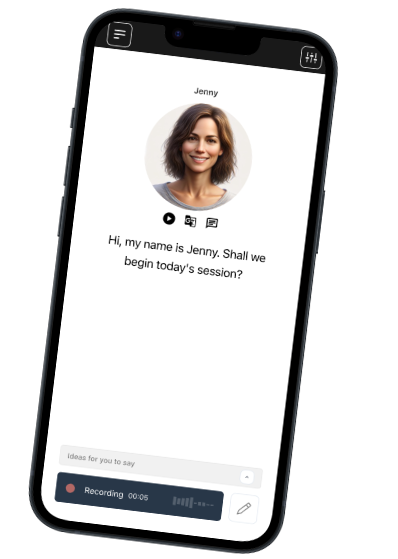
Talkio is the ultimate language training app that uses AI technology to help you improve your oral language skills!
Try Talkio