The Case for Conversation Rehearsal: How Professionals Use AI to Practice High-Stakes Talks in a Second Language
Last updated on
Editorial owner: Taylor Freeman · Editorial policy
You have a client call in German tomorrow. A team standup in Spanish at 9 AM. A salary negotiation in English, and it is not your first language. You know the vocabulary. You have studied the grammar. But the moment you imagine yourself actually speaking, your stomach tightens.
This is the gap that no textbook, flashcard app, or grammar course can close. It is not a knowledge gap. It is a rehearsal gap.
And in 2026, a growing number of professionals are closing it by rehearsing real work conversations with AI before they happen.
The Rehearsal Gap in Professional Language Use
Actors rehearse before performances. Athletes run plays before games. Musicians practice scales before concerts. But when it comes to speaking a second language at work, most people just show up and hope for the best.
The result is predictable. Neuroscience research shows that passive language knowledge (reading, listening) and active production (speaking) rely on different neural pathways. Understanding a language does not automatically mean you can produce it under pressure. The gap between comprehension and production widens dramatically when stakes are high, when you are nervous, when the conversation moves fast.
This is why so many multilingual professionals report a frustrating pattern: they can follow meetings perfectly but struggle to contribute. They can write polished emails but stumble through phone calls. They know what they want to say but cannot find the words quickly enough.
Why Traditional Practice Falls Short for Working Professionals
Language exchange apps and conversation partners have been around for years. But they come with friction that makes them impractical for busy professionals. Scheduling a session with a human tutor takes planning. Finding a language partner who understands corporate finance or supply chain logistics is unlikely. And practicing the specific conversation you need to have tomorrow, with the exact vocabulary and tone required, is nearly impossible with a generic curriculum.
Recent research published in Frontiers in Psychology confirms that communication barriers remain among the most persistent challenges facing multicultural remote teams. The study highlights that cultural differences and psychological distance compound language difficulties, making preparation even more critical.
The traditional approach to corporate language training, classroom courses spread over months, does not match the speed at which professionals encounter high-stakes language situations. You do not need to “learn Spanish” in the abstract. You need to nail a specific presentation next Tuesday.
How AI Conversation Rehearsal Actually Works
The concept is simple but powerful. Instead of practicing generic dialogues about ordering coffee or asking for directions, you practice the actual conversation you are about to have.
Modern AI conversation platforms let you set up specific scenarios. You can tell the AI: “You are my German-speaking client. I need to explain a project delay and propose a new timeline.” Or: “You are my Spanish-speaking manager. I want to discuss taking on more responsibility.” The AI adapts its language level, vocabulary, and even personality to match the scenario.
This is fundamentally different from chatting with a general-purpose AI assistant. General AI tools like ChatGPT lack the structured feedback, pronunciation analysis, and scenario persistence that make rehearsal effective. A purpose-built language practice platform provides corrections in real time, tracks recurring mistakes, and keeps the conversation focused on your specific learning goals.
The key benefits of AI conversation rehearsal for professionals include:
- Specificity. Practice the exact conversation you need, with relevant industry vocabulary and context.
- Availability. Rehearse at 11 PM the night before a meeting, or during your lunch break, without scheduling anyone.
- Repetition without judgment. Run the same scenario five times until it feels natural. Research confirms this repeated low-pressure practice reduces speaking anxiety significantly.
- Instant feedback. Get corrections on grammar, word choice, and pronunciation immediately, not days later in a tutor session.
The Business Case: Why Companies Are Paying Attention
The corporate language training market is undergoing a fundamental shift. Organizations are moving away from one-size-fits-all classroom programs toward personalized, on-demand solutions that deliver measurable results.
Industry analysts now use the term ‘communication readiness’ rather than “language training” to describe what companies actually need. The distinction matters. Language training implies a long-term educational project. Communication readiness means ensuring employees can handle specific interactions effectively, right now.
For companies with distributed teams across multiple countries, the ROI of conversation rehearsal is straightforward. A manager who can confidently lead a meeting in her team’s language builds more trust in one call than months of translated emails ever could. A salesperson who rehearses a pitch in the client’s language before dialing closes more deals. With remote work continuing to expand globally, these cross-cultural interactions are becoming daily occurrences rather than occasional events.
Five High-Stakes Scenarios Worth Rehearsing
Not every conversation requires rehearsal. But certain professional situations benefit enormously from a practice run:
1. Performance reviews and feedback conversations. Delivering constructive feedback in a second language requires precision. The wrong word choice can turn coaching into criticism. Rehearsing helps you find the right tone.
2. Client negotiations. When money and contracts are on the table, hesitation signals weakness. Practicing your key points and potential objections in the target language lets you negotiate with confidence.
3. Job interviews. The highest-stakes language situation most professionals face. Rehearsing answers to common questions, plus your own questions for the interviewer, can be the difference between getting the offer and getting a polite rejection.
4. Team standups and status updates. These seem low-stakes, but daily visibility matters. If you consistently sound uncertain in standups, colleagues may underestimate your competence. A few minutes of rehearsal before your first standup in a new team can set the right tone.
5. Crisis communication. When something goes wrong, explaining the situation clearly and calmly in a second language is critical. You do not want to discover gaps in your vocabulary when reporting a security incident to stakeholders in another country.
Making Rehearsal a Habit, Not a Last Resort
The professionals who benefit most from AI conversation rehearsal are not the ones who use it only before emergencies. They are the ones who build it into their routine.
Ten minutes before the workday starts. A quick scenario during lunch. A review of tomorrow’s agenda with a practice run of any conversations that will happen in a second language. Cross-cultural communication researchers emphasize that consistency matters more than intensity when building communication skills.
The technology has reached a point where this is genuinely practical. AI voices sound natural. Response times are fast enough for real conversation flow. Text-to-speech quality in language learning has improved dramatically, making AI conversation partners sound less like robots and more like patient colleagues who happen to have infinite time for you.
Platforms like Talkio are designed specifically for this kind of targeted speaking practice, offering structured scenarios with real-time feedback that helps professionals move from mental rehearsal to actual spoken fluency.
The Competitive Advantage You Did Not Know You Had
Here is what makes conversation rehearsal a genuine career advantage: almost nobody does it. Most multilingual professionals rely on passive study or hope that immersion will be enough. The ones who actively rehearse high-stakes conversations stand out immediately.
They sound more confident. They use more precise vocabulary. They recover faster from mistakes. And perhaps most importantly, they are willing to take on opportunities that their equally qualified but less prepared colleagues avoid.
In a global job market where cross-cultural communication is no longer optional, the ability to walk into any meeting in any language and sound prepared is not just a soft skill. It is a strategic advantage that compounds over time.
The question is not whether AI conversation rehearsal works. The research and the results speak for themselves. The question is whether you will start rehearsing before your next high-stakes conversation, or keep hoping for the best.
Talk Your Way
to Fluency
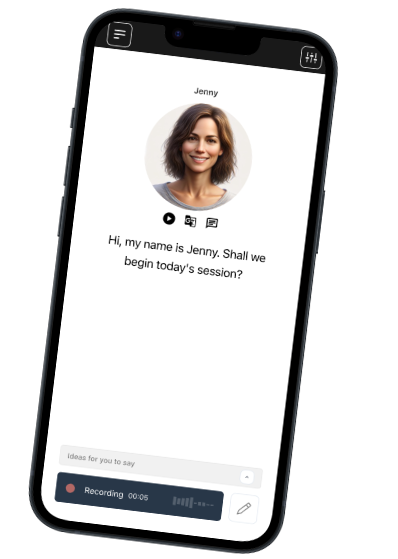
Talkio is the ultimate language training app that uses AI technology to help you improve your oral language skills!
Try Talkio