I Used ChatGPT Voice Mode for Language Practice for 30 Days, Here Is What It Cannot Do
Last updated on
Editorial owner: Taylor Freeman · Editorial policy
ChatGPT’s voice mode is everywhere right now. Language learners on Reddit, TikTok, and every productivity blog are raving about it as the ultimate free conversation partner. And honestly, they are not wrong to be excited. Talking to an AI that responds naturally in real time felt like science fiction two years ago.
But after spending 30 days using ChatGPT’s advanced voice mode as my primary language practice tool, I hit walls that no amount of clever prompting could fix. Here is what it does brilliantly, where it falls apart, and what that means for anyone serious about improving their speaking skills.
What ChatGPT Voice Mode Gets Right
Credit where it is due. ChatGPT’s voice mode is impressive technology. The response speed is nearly instantaneous, the voice sounds natural, and it can switch between languages mid-conversation without breaking a sweat. For casual practice, it feels like chatting with a patient, endlessly available friend who happens to speak 50 languages.
The flexibility is genuine. You can ask it to role-play a job interview in German, practice ordering coffee in Portuguese, or debate philosophy in Japanese. It adapts to your level on the fly and never gets tired, frustrated, or distracted. Compared to trying to schedule a language exchange session with another human, the convenience factor is unbeatable.
For learners who have been stuck in the flashcard-and-grammar loop, just having a real conversation, even with an AI, can be transformative. The psychological barrier of “I have never actually spoken this language” crumbles the first time you manage a five-minute chat.
Where It Falls Apart
The problems are not obvious on day one. They creep in around week two, when the initial excitement fades and you start paying attention to what is actually happening to your skills.
No structured feedback on pronunciation. ChatGPT will understand you even when your pronunciation is rough. That sounds like a feature, but it is actually a problem. When an AI understands your mangled French “r” without comment, you never learn to fix it. Pronunciation feedback requires explicit correction, not just comprehension, and ChatGPT is not built to provide that.
No memory of your learning journey. Every conversation starts fresh. ChatGPT does not remember that you struggled with subjunctive mood last Tuesday, that you keep confusing “por” and “para,” or that you have already mastered restaurant vocabulary. There is no progression, no curriculum, no sense of building on previous sessions. You are improvising every single time.
It is too agreeable. Ask ChatGPT if your sentence was correct and it will almost always say yes, or offer a gentle “that is great, but you could also say…” This is polite. It is also useless for learning. Real improvement requires honest, specific correction delivered consistently, not cheerful validation.
No accountability or structure. Without a framework, most learners default to the same comfortable topics. You end up having the same “tell me about your weekend” conversation fifty times, which feels productive but is not. Research on deliberate practice shows that improvement comes from structured challenge at the edge of your ability, not comfortable repetition.
Dialect and register blindness. ChatGPT defaults to textbook-standard language. If you are learning Mexican Spanish, it will happily use “vosotros.” If you are practicing casual Japanese, it tends toward formal registers. Real-world speaking requires navigating registers and regional variations, something general-purpose AI handles poorly.
The Fundamental Problem: It Was Not Built for This
This is not a criticism of ChatGPT. It is a recognition that a general-purpose conversational AI and a purpose-built language learning tool are solving different problems.
ChatGPT was designed to be helpful across thousands of use cases: writing emails, debugging code, brainstorming ideas, answering questions. Language practice is just one of many things it can sort of do. A dedicated AI language practice tool is built from the ground up for one thing: making you a better speaker.
The difference shows up in the details. Purpose-built tools track your weak points across sessions. They correct pronunciation explicitly. They adjust difficulty based on your actual level, not your self-reported one. They structure conversations around evidence-based learning principles rather than whatever topic you happened to request.
Think of it this way: you can use a Swiss Army knife to cut a steak, but you would not say it replaces a proper chef’s knife.
When to Use What
ChatGPT voice mode is excellent for:
- Breaking the ice if you have never spoken your target language out loud
- Casual practice when you want low-stakes conversation
- Exploring vocabulary in real-time (“how would a native say this?”)
- Supplementing, not replacing, structured practice
A dedicated language practice platform is better for:
- Systematic improvement with tracked progress
- Honest pronunciation and grammar feedback
- Structured conversation scenarios that push your boundaries
- Consistent daily practice with measurable results
- Learning the specific dialect and register you actually need
The Bottom Line
ChatGPT voice mode lowered the barrier to AI-powered language practice to zero, and that matters. Millions of people who would never have signed up for a language tool are now having their first real conversations in a second language. That is genuinely good for the world.
But “first conversation” and “actual fluency” are separated by hundreds of hours of deliberate, structured practice. And for that, you need a tool that was purpose-built for the job, one that remembers where you struggled, pushes you where you are weak, and gives you the honest feedback that a polite chatbot never will.
Use ChatGPT voice mode to get started. Use something built for language learning to get good.
Talk Your Way
to Fluency
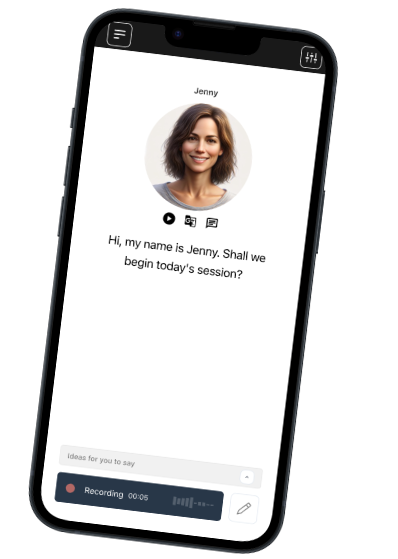
Talkio is the ultimate language training app that uses AI technology to help you improve your oral language skills!
Try Talkio