AI Conversation Partners vs. Language Exchange Apps
Last updated on
Editorial owner: Taylor Freeman · Editorial policy
Language exchange apps promised us real conversations with native speakers from around the world. The idea was simple: you help someone practice English, they help you practice Spanish, and everyone wins. But anyone who’s spent time on these platforms knows the reality is messier.
Scheduling conflicts, ghosting, awkward silences, and well-meaning partners who correct you once and then let errors slide. For many learners, the speaking gap remains wide despite hours logged on exchange platforms.
Enter AI conversation partners. In 2026, these tools have evolved from robotic chatbots into genuinely useful practice companions. They’re not replacing human connection entirely, but they’re filling a gap that language exchanges never quite managed to close.
The Promise vs. Reality of Language Exchange
Language exchange apps work beautifully in theory. You match with someone learning your native language, split your conversation time 50/50, and both walk away with valuable practice. The research on tandem learning supports this model. Peer interaction can accelerate acquisition when done right.
The problems emerge in practice. Finding a partner in your target language who’s also learning yours, at a compatible level, with matching availability, who actually shows up consistently, is harder than most apps admit. Studies from the Modern Language Association indicate that most language exchange partnerships fizzle within weeks.
Even when partnerships stick, the learning quality varies wildly. Your partner might not know how to give useful corrections. They might be too polite to point out repeated mistakes. Or they might over-correct, making you self-conscious about every word. The experience depends entirely on who you’re matched with.
What AI Conversation Partners Actually Offer
AI conversation partners in 2026 have solved the logistical problems that plague human exchanges. They’re available 24/7, they don’t ghost you, and they don’t need you to practice their English in return. But availability isn’t their real advantage.
The meaningful difference is consistent, detailed feedback. Modern AI tutors can identify pronunciation errors, grammar mistakes, and vocabulary gaps in real-time. They can adjust their speaking speed and complexity based on your level. They remember what you struggled with last session and bring it up again later.
Research published by Educational Testing Service shows that immediate, specific feedback accelerates language learning more than delayed or general feedback. This is exactly what AI partners excel at delivering.
The Speaking Practice Problem
Most language learners don’t speak enough. Apps gamify vocabulary memorization, courses focus on grammar rules, and learners spend hours in passive study that never converts to active production. Micro-learning myths don’t help either.
Speaking requires a different kind of practice. You need to retrieve words under time pressure, construct sentences on the fly, and push through the discomfort of making mistakes out loud. Language exchanges were supposed to solve this, but many learners find them stressful rather than productive.
AI partners create a lower-stakes environment for this crucial practice. You can stumble, repeat yourself, and take your time without worrying about wasting someone else’s time or looking foolish. For learners who freeze up in real conversations, this practice space is genuinely valuable.
What AI Still Can’t Replace
AI conversation partners excel at structured practice but struggle with the unpredictable nature of real human interaction. They don’t have personal stories, cultural nuances from lived experience, or the ability to bond over shared interests the way another person does.
A conversation about your partner’s hometown teaches you things about a language and culture that no AI can replicate. The emotional investment of a real relationship, even a casual language exchange friendship, creates motivation that’s hard to manufacture artificially.
There’s also the question of current slang and local expressions. AI models train on data from the past. Your human language partner knows what people are actually saying right now, including trends that emerged last month.
The Hybrid Approach Makes Sense
The learners getting the best results in 2026 aren’t choosing between AI and human partners. They’re using both strategically.
AI conversation partners handle the volume work: daily speaking practice, pronunciation drilling, grammar reinforcement, and building baseline fluency without scheduling hassles. This regular practice builds the confidence and competence that makes human conversations more productive.
Human partners then provide what AI cannot: authentic cultural exchange, real-world unpredictability, and the irreplaceable experience of connecting with another person in their language. When you’ve already practiced with AI, you show up to these conversations better prepared and more confident.
This mirrors how achieving native-like pronunciation requires both technical practice and real-world exposure.
Who Benefits Most from AI Conversation Partners
Not every learner needs to switch their approach. If you have a reliable language exchange partner who gives you consistent, useful feedback and helps you improve, that’s genuinely valuable. Don’t fix what isn’t broken.
But if you’ve cycled through multiple exchange partners, struggled to find consistent practice time, or found that your speaking skills lag behind your reading and listening, AI conversation partners deserve serious consideration.
Busy professionals, introverts who find exchanges draining, learners at unusual levels (too advanced for most materials but not fluent), and anyone in a timezone that makes scheduling difficult are all prime candidates for AI-assisted practice.
The Practical Reality
The shift toward AI conversation partners isn’t about technology being “better” than humans. It’s about solving a practical problem that language exchanges never fully addressed: most learners need more speaking practice than they can realistically get from volunteer partners.
AI fills that gap. It provides the repetition, the feedback, and the low-pressure environment that builds speaking skills. Human connection remains irreplaceable for everything else.
Language learning has always required both practice and authentic interaction. AI conversation partners have simply made the practice portion more accessible, consistent, and effective. For learners who’ve struggled with the traditional exchange model, that’s a meaningful improvement.
The question isn’t whether AI will replace human language partners. It’s whether you’ll use these new tools to accelerate the journey to real conversations with real people. Based on what learners are experiencing in 2026, the answer increasingly is yes.
Talk Your Way
to Fluency
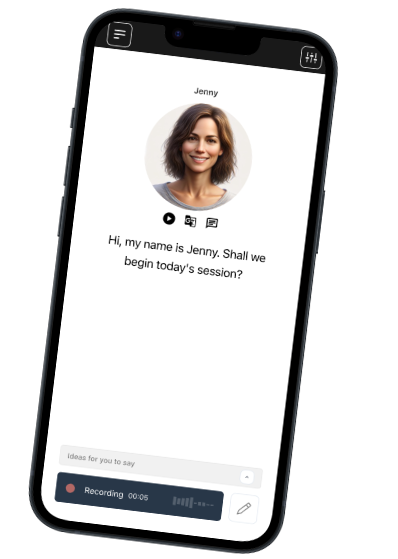
Talkio is the ultimate language training app that uses AI technology to help you improve your oral language skills!
Try Talkio