How to Do TOEFL Speaking Practice at Home With AI in 2026
Last updated on
If you are trying to raise your TOEFL speaking score in 2026, the biggest mistake is practicing like the test is only about grammar. It is not. The speaking section rewards clear structure, steady pacing, relevant detail, and the ability to keep going when your brain wants to freeze. That is exactly why AI practice helps. Used right, it gives you more speaking reps, faster feedback, and a low-pressure way to rehearse before test day.
Official TOEFL speaking tasks are built around communicating clearly in academic situations, not sounding perfect. That matters. A lot of learners still waste weeks memorizing fancy phrases instead of training the real skill, which is answering a prompt out loud with a clean structure and understandable delivery.
That is also why at-home practice looks different in 2026. AI has gone from gimmick to useful rehearsal tool. Broader language teaching trends in 2026 point in the same direction, learners and teachers are using AI for guided feedback, structured practice, and confidence-building between formal lessons. For TOEFL speaking prep, that is a pretty natural fit.
What the TOEFL speaking section is really testing
Before you build a practice routine, get honest about the target. TOEFL speaking is not just an accent contest. It checks whether you can understand a task, respond on time, organize ideas, and speak clearly enough that your message lands. ETS also makes it clear that institutions set their own score expectations, and that scores are meant to reflect real academic communication, not just test-taking tricks. You can review the bigger scoring picture on the official TOEFL score guide.
So your practice should train five things:
- answering the prompt directly
- organizing your response fast
- speaking at a controlled, natural pace
- using simple language accurately
- recovering when you hesitate or make a small mistake
If your current prep is mostly reading sample answers and hoping confidence appears on command, that is a lousy plan.
Why AI works so well for TOEFL speaking practice at home
The best thing about AI is volume. You can do ten speaking reps in one evening without booking a tutor, bothering a friend, or waiting for class. That matters because speaking is a performance skill. You do not get better by admiring model answers. You get better by opening your mouth a lot.
AI also helps because it can simulate the exact pressure most test takers struggle with:
- limited prep time
- unexpected prompts
- follow-up questions
- timed responses
- feedback on clarity and structure
That is the same reason Talkio works well for solo practice. If you already liked our guide on how to practice speaking a language alone, this is the test-prep version of that same idea, fewer excuses, more reps, better feedback.
The best at-home TOEFL speaking routine with AI
Here is the clean system.
1. Train with short daily sets
Do not save all your speaking practice for one giant weekend cram session. Run three to five prompts per day. That is enough to build rhythm without frying your brain. For each prompt, give yourself a short prep window, answer out loud, then review what actually happened.
Your review should be brutally simple:
- Did I answer the question?
- Did I have a clear beginning, middle, and end?
- Where did I hesitate?
- Which part sounded vague or repetitive?
2. Use a response structure you can repeat under stress
Most learners fall apart because they invent a new structure every time. Bad idea. Pick one simple framework and reuse it until it becomes automatic. For opinion-style prompts, something like this works:
- state your answer in one sentence
- give two reasons
- add one quick example
- end cleanly
It is not glamorous, but it works. Test-day fluency is mostly organized familiarity.
3. Practice integrated speaking, not just easy opinion prompts
A lot of people hide inside the easiest task type because it feels better. Then the integrated questions punch them in the face. Do not do that. Use AI to rehearse summarizing a short explanation, comparing two viewpoints, or answering after listening to a brief passage. Those are the tasks that expose weak note-taking and weak structure fast.
If you want a broader rehearsal mindset, our post on conversation rehearsal explains why simulated pressure works so well before real performance.
4. Ask for feedback on clarity, not just mistakes
This is where people get it backwards. Yes, grammar matters. But if your answer is hard to follow, pretty grammar will not save it. Ask your AI tool to score the response on:
- directness
- organization
- specificity
- repetition
- pacing
That kind of feedback actually moves your score because it changes how you sound under time pressure.
5. Re-record weak answers once, then move on
One redo is useful. Seven redos is just perfectionism dressed up like discipline. Fix the biggest problem, record again, compare, and keep it moving. If fear of sounding awkward is still slowing you down, read why making mistakes is the fastest way to fluency. Same principle here.
A practical weekly TOEFL speaking plan
If you are studying alone, use this weekly split:
- Monday: 4 independent prompts, focus on structure
- Tuesday: 3 integrated prompts, focus on notes and summaries
- Wednesday: 4 mixed prompts, focus on pacing
- Thursday: review your weakest recordings and re-do 2 of them
- Friday: full timed mini-set
- Weekend: lighter review, phrase bank, pronunciation cleanup
Keep the workload realistic. Official TOEFL prep resources matter, but they work better when you pair them with live speaking repetition instead of passive reading.
Common mistakes that tank TOEFL speaking scores
- Starting too late: long pauses at the beginning make weak answers look even weaker.
- Using memorized fancy phrases: if they sound unnatural, they hurt more than they help.
- Giving reasons with no example: your answer sounds thin fast.
- Talking too fast: panic speed is not fluency.
- Avoiding timed practice: that is like training for a race by reading about running.
If you want a useful benchmark, compare your recordings over time against a simple question: would a busy university instructor understand me easily on the first listen? That is a better target than chasing perfect pronunciation. We make a similar point in our post on what fluency actually means in 2026.
The no-BS takeaway
If you want better TOEFL speaking results, practice speaking, not just studying about speaking. AI is valuable because it makes structured repetition cheap, private, and easy to fit into daily life. That means more reps, less avoidance, and better test-day control.
So keep it simple. Use official TOEFL materials for task familiarity. Use AI for timed speaking drills, feedback, and repetition. Track clarity, structure, and pacing. Then do the reps until answering under pressure feels normal.
That is the whole game. Not magic, not hacks, just smart rehearsal that actually transfers when the timer starts.
Talk Your Way
to Fluency
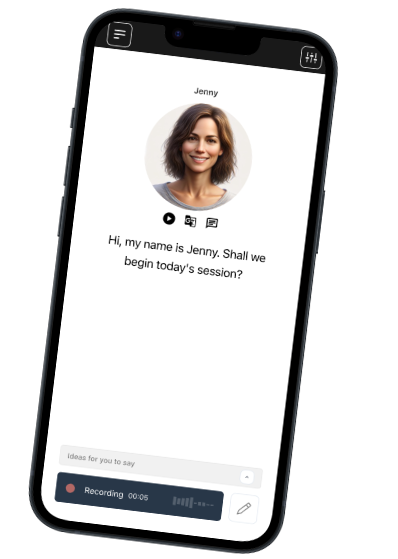
Talkio is the ultimate language training app that uses AI technology to help you improve your oral language skills!
Try Talkio