What Is Considered Speaking a Language Fluently in 2026? Here Is the Honest Answer
Last updated on
Editorial owner: Theis Froehlich · Editorial policy
“What is considered speaking a language fluently?” is one of those questions people ask when they are close enough to real progress to get impatient. In 2026, the question matters even more because AI translation, voice assistants, and speaking tools are everywhere. A lot of learners now wonder whether fluency still means sounding native, or whether it simply means getting the job done.
Here is the honest answer: fluency is not perfect grammar, a perfect accent, or knowing every word. Fluency means you can keep a real conversation moving without falling apart every time something unexpected happens.
That sounds simple, but plenty of learners miss it. They judge themselves by textbook accuracy when they should be judging themselves by communication under pressure. If you can explain what you mean, recover when you get stuck, ask follow up questions, and stay present in the conversation, you are already a lot closer to fluency than you think.
That is also why speaking practice matters so much now. As AI gets better at translation and support, the real value of fluency shifts toward something more human, your ability to respond in real time with clarity, confidence, and your own personality. Talkio has touched this theme before in As AI Translation Gets Better, Speaking Practice Matters More, Not Less. The next step is getting clear on what fluent actually looks like in real life.
Fluency is not native perfection
A lot of learners carry around a brutal definition of fluency. They think fluent means sounding like they were raised in the language, never hesitating, and never making a mistake. That definition is nonsense.
Even native speakers pause, backtrack, search for words, restart sentences, and say awkward things. Real speech is messy. What makes somebody sound fluent is not perfection. It is momentum.
If you can keep going after a small mistake, rephrase instead of freezing, and understand enough to stay in the exchange, you are showing fluency. That idea lines up with international proficiency frameworks like the CEFR levels summarized by Cambridge English, which focus on what a learner can actually do in real communication, not whether every sentence comes out polished.
This matters because learners often underrate themselves. Someone can hold a 20 minute conversation, explain a work problem, and make a joke, then still say, “I’m not fluent because I make too many mistakes.” That is crazy. Mistakes are part of fluency. Panic is the real bottleneck.
If that sounds familiar, read Why Making Mistakes Is the Fastest Way to Fluency. The whole point is that forward motion beats spotless speech.
What is considered speaking a language fluently in 2026?
In practical terms, speaking a language fluently in 2026 means you can do most of these things without too much strain:
- handle an unscripted conversation on familiar topics
- ask for clarification and keep going when you miss something
- express opinions, preferences, and small emotions without translating every line in your head
- adapt when the other person changes direction
- sound natural enough that the conversation feels normal, even if not perfect
That last point matters more than people admit. Fluency is not just whether your sentence is correct. It is whether the interaction still feels alive. If every reply sounds delayed, memorized, or fragile, people notice. If you respond with decent timing and enough flexibility, people relax, and the conversation starts to flow.
In other words, fluency is functional. It is contextual. A learner might be fluent at chatting with coworkers, traveling, and handling everyday life, but not yet fluent at debating politics or giving a technical presentation. That does not make their fluency fake. It makes it domain specific, which is how language actually works.
This is why scenario based practice is so effective. You do not train for “fluency” as one giant abstract skill. You train for meetings, interviews, travel, small talk, presentations, doctor visits, and difficult conversations. Over time those pockets connect. Talkio’s article on conversation rehearsal for high stakes talks gets this exactly right.
What does not count as fluency
Some things feel like progress, but they are not the same as being fluent.
Understanding a podcast with subtitles is useful, but it is not fluency. Memorizing polished answers for class is useful, but it is not fluency. Having excellent grammar on paper is useful, but it is not fluency. Getting a translation from AI in the middle of every sentence is definitely not fluency.
The real test is whether you can stay in the conversation when the script disappears.
This is where a lot of learners get frustrated. They know much more than they can say. They understand Spanish, French, German, or English when they hear it, but their mouth just will not cooperate when it is their turn. That gap is common, and it does not mean you are failing. It means passive knowledge has outrun active speaking skill. If you have lived that exact nightmare, this breakdown of why learners freeze when they speak is worth your time.
Why the fluency standard is changing in the AI era
AI is changing language learning fast. New models keep improving, and mainstream education tools are getting more AI support every few months. Stanford’s AI Index and recent reporting from MIT Technology Review both show the same thing, AI capability and adoption are moving like hell. Google is also pushing more AI tools into education workflows, which means more learners will study with AI by default, not as some weird extra experiment.
So what changes? Not the value of fluency, the value of weak fluency.
Basic comprehension is easier to outsource now. Looking up vocabulary is trivial. Translation is fast. Rewriting a sentence is cheap. But none of that gives you conversational presence. It does not give you timing, calmness, persuasive tone, or the ability to react when another human says something surprising.
That is why the modern fluency benchmark is shifting away from “Can you produce a perfect sentence?” and toward “Can you hold your own in a live exchange without leaning on a machine every ten seconds?”
Honestly, that is a better standard anyway. It is more useful at work. It is more useful in relationships. It is more useful when traveling. It is more useful anywhere real people exist.
How to build real speaking fluency
If you want fluency that actually counts, train for recoverable speech. That means practicing until you can survive little breakdowns without mentally leaving the conversation.
A simple structure works well:
- pick one real situation you care about
- collect a few key phrases, but do not memorize a whole script
- practice aloud until your replies feel less brittle
- repeat with variations and surprise questions
- review the weak spots after the conversation, not during every sentence
This is why AI speaking practice can be so useful when it is used correctly. The point is not to generate perfect answers for you. The point is to create enough realistic repetition that your brain stops treating speaking as an emergency.
If you need a low pressure entry point, start with a short speaking warm up routine. If your pronunciation still feels clunky, add targeted drills like the ones in Talkio’s tongue twister article. The goal is not to sound perfect overnight. The goal is to make speaking feel normal.
The bottom line
So, what is considered speaking a language fluently in 2026? Not sounding native. Not getting every grammar point right. Not knowing every word. Fluency means you can participate, recover, and connect in real time.
If you can keep the conversation moving, even with some mistakes, that counts. If you can express yourself without shutting down the second things get messy, that counts. If another person can talk with you, not just at you, that counts too.
That is the standard that actually matters now. In an AI-heavy world, fluency is becoming less about polished performance and more about human presence. That is good news, because presence is trainable. You do not need perfect language to be fluent. You need enough language, enough reps, and enough nerve to stay in the damn conversation.
Talk Your Way
to Fluency
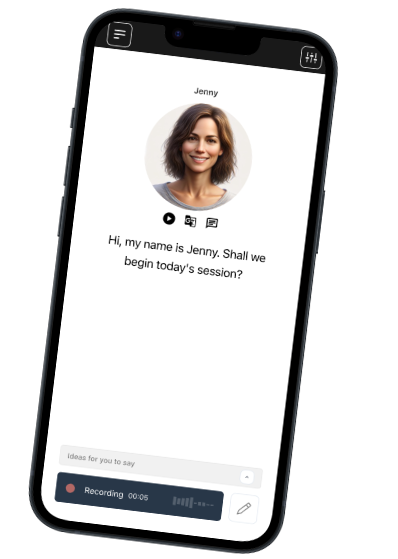
Talkio is the ultimate language training app that uses AI technology to help you improve your oral language skills!
Try Talkio