Google Translate Wants To Help You Pronounce Words Better. Here Is What It Still Cannot Teach
Last updated on
Editorial owner: Theis Froehlich · Editorial policy
Google just gave Translate a pronunciation practice feature, and honestly, that makes sense. It is fast, familiar, and low pressure. You type a phrase, hear it spoken back, repeat it, and get immediate feedback. For a lot of learners, that is a better first rep than silently rereading the same sentence ten times and hoping it sticks.
But this update also exposes the biggest confusion in language learning right now. People keep treating pronunciation as if it were the same thing as speaking. It is not. Clean pronunciation helps, but real speaking starts the second the conversation stops being scripted. That is the part most tools still avoid, and it is the part that decides whether you can actually use a language at work, while traveling, or in day to day life.
According to TechCrunch, Google Translate now lets learners practice pronouncing translated words and phrases, hear model audio, and get feedback on what sounded unclear. Around the same time, Google also highlighted how Translate has grown across nearly 250 languages and added more live translation experiences on headphones and mobile devices in its 20 year milestone post. That is useful progress, no question. It also means more people are going to run into the same wall faster: sounding better on a phrase is not the same as being ready for a conversation.
What pronunciation practice actually does well
Let’s give the feature its due. Pronunciation drills are good for a few important things. If you are unsure what to listen for, start with the guide to common English pronunciation mistakes:
- They help you notice sounds your first language trained you to ignore.
- They reduce the friction of saying a new word out loud for the first time.
- They build muscle memory for stress, rhythm, and mouth position.
- They give immediate feedback, which is way better than guessing.
If you freeze when speaking because you are afraid of sounding wrong, a low stakes tool is a solid warm up. That is one reason learners already use structured solo practice before moving into longer speaking sessions, which is exactly why posts like this guide to practicing speaking alone keep resonating. Small reps count.
There is another benefit, too: pronunciation tools are brutally honest in a good way. They do not flatter you. If a vowel is off or your stress pattern lands weird, you hear it. That can be uncomfortable, but it is useful. Better to catch it in practice than in a job interview, classroom discussion, or customer call.
Where pronunciation practice stops helping
Here is the catch. Most real conversations are not pronunciation tests. They are decision tests.
In real life, you are not just repeating a sentence. You are listening, choosing words, tracking tone, reacting to surprise, and repairing mistakes in real time. That is why so many learners can pronounce a translated line pretty well, then completely fall apart when the other person answers with a follow up question they did not expect.
Say you practice “I would like to reschedule the meeting to Thursday afternoon.” Great. Useful sentence. Then the other person says, “Thursday works, but only after three. Does your team need the revised budget first?” Now pronunciation is not the main problem anymore. The problem is processing speed, confidence, and being able to build the next sentence under pressure.
That gap is exactly why instant translation tools have not killed language learning motivation. They remove some friction, but they do not remove the need to think, respond, and sound like a real person in motion. If anything, better translation makes the remaining speaking gap more obvious.
The missing skill is interaction, not just accuracy
Language learners often chase cleaner output when what they actually need is more interaction. That means:
- taking a turn without rehearsing for two full minutes first
- asking someone to repeat or clarify something
- buying time naturally with phrases like “let me think for a second”
- recovering after a mistake without mentally quitting the conversation
- switching from one prepared sentence into an unscripted exchange
This is where the strongest speaking practice looks less like a pronunciation lab and more like conversation rehearsal. There is a reason professionals already rehearse hard moments before they happen, whether it is a presentation, an interview, or a tense client call. Conversation rehearsal works because it trains the transition between what you planned to say and what you now need to say.
That transition is the whole game. Pronunciation drills help you start the car. Interaction practice teaches you how to drive in traffic.
How to use translation practice without getting stuck there
The smart move is not to reject tools like Google Translate. It is to use them in the right order. A good routine looks like this:
- Step 1: Translate the phrase you genuinely need, not a random textbook sentence.
- Step 2: Use pronunciation feedback until the phrase feels comfortable in your mouth.
- Step 3: Say the same idea three different ways without looking at the screen.
- Step 4: Add one likely follow up question and answer it out loud.
- Step 5: Turn the phrase into a two minute dialogue with interruptions, hesitation, and recovery.
That last part matters most. If you only practice clean, isolated sentences, you train performance without training resilience. The moment the script breaks, so do you. If you practice the messy second and third turn of the conversation, you get something much closer to usable fluency.
This is also why learners who care about confidence should not obsess over sounding perfect from the jump. Research and classroom experience both point in the same direction: anxiety drops when learners get repeated, low stakes speaking reps. That is the same logic behind using AI conversation partners to reduce speaking anxiety. The win is not perfection. The win is staying in the exchange long enough to improve.
Why this trend actually helps Talkio’s category
There is a bigger market signal hiding in all this. Translation apps, meeting tools, and voice interfaces are all moving closer to spoken practice. Google’s new pronunciation feature and its broader push into live translation experiences, including expanded headphone translation coverage reported by TechCrunch in March, show that the interface layer is getting better fast.
Good. That is not bad news for speaking platforms. It is proof that voice is where the real demand is going.
But once learners get past the novelty, they discover a hard truth. Better translation can help with access. Better pronunciation feedback can help with polish. Neither one can carry a five minute conversation for you when your boss asks a follow up, your classmate interrupts, or your Airbnb host says the check in instructions changed.
That is why the future probably belongs to stacks, not single tools. Translation for instant support. Pronunciation feedback for cleaner sounds. Then actual conversation practice for the part that still feels human, unpredictable, and a little uncomfortable. If you skip that last layer, you stay dependent on the script.
And that is the reveal. For most learners, the thing holding them back is not their accent. It is not even vocabulary, at least not first. It is the half second after the other person says something unexpected. That is where confidence collapses or fluency starts. Pronunciation practice can get you to the front door. Real conversation practice is what gets you inside.
Talk Your Way
to Fluency
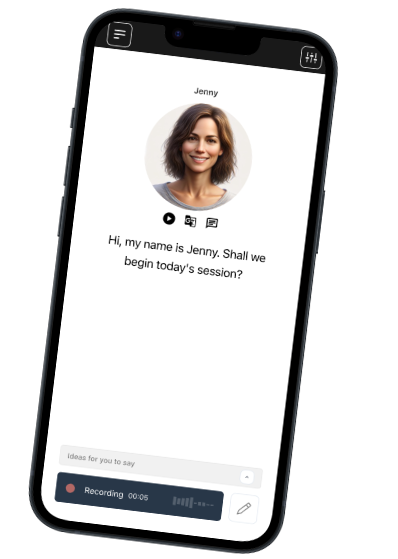
Talkio is the ultimate language training app that uses AI technology to help you improve your oral language skills!
Try Talkio