Instant Translation Is Everywhere, So Why Are Smart Language Learners Practicing Speaking Even More?
Last updated on
Editorial owner: Grzegorz Markowski · Editorial policy
Real time translation is having a moment again. New AI demos keep making it look like language barriers are basically dead, just wear an earbud, open an app, and let the machine do the talking. It is impressive tech, no question. But if you actually need to work, study, travel, interview, or build trust in another language, translation is still not the same thing as speaking.
That gap matters more in 2026, not less. As voice mode gets smoother and live translation tools get more common, a lot of language learners are asking the wrong question. They ask, “Do I still need to practice speaking if AI can translate for me?” The better question is, “What kind of speaking practice makes me useful when AI is in the room too?”
The answer is not endless grammar drills, and it is not pretending translation tools do not exist. It is learning to use instant translation as scaffolding, then deliberately training the moments where your own voice still carries the whole interaction. That is where confidence, speed, and credibility get built.
Why live translation does not remove the need to speak
Translation tools are getting better at one thing people love, reducing friction in the first thirty seconds of an interaction. They help you catch meaning, survive an unfamiliar phrase, and avoid freezing. That is a huge win. In many cases, they are the difference between silence and momentum.
But they do not solve the deeper job of communication. In a real conversation, especially a high stakes one, you are not only transferring information. You are managing tone, timing, confidence, humor, politeness, and trust. That is where people still judge your readiness.
If you have ever joined a meeting in a second language, you already know this. A translation layer can help you understand what was said. It cannot fully replace your ability to jump in quickly, soften a disagreement, explain a tradeoff, or sound calm when the room turns to you. That is why professionals still rehearse high stakes talks in a second language, even when translation support is available.
There is a simpler way to put it. Translation helps you survive. Speaking practice helps you participate.
The new goal is not perfect fluency, it is fast recovery
One of the biggest mindset shifts for language learners in 2026 is this, you do not need to sound perfect all the time. You need to recover fast when the conversation speeds up, the phrasing changes, or the AI output is not quite right.
That is where modern speaking practice gets interesting. You can now simulate the exact moments that usually make people choke, like a fast follow up question, a polite interruption, an unclear instruction, or a phrase you understand passively but never say out loud. Practicing those moments is far more useful than only memorizing clean textbook answers.
It is also why learners who rely only on passive input often stall. You can understand a ton, and still freeze when you open your mouth. We have already seen this pattern in learners who know plenty of vocabulary but still lock up under pressure. If that sounds familiar, read why you understand Spanish but freeze when you open your mouth. The problem is not intelligence. The problem is untrained retrieval under stress.
How to use instant translation without becoming dependent on it
The smartest move is not rejecting translation tools. It is using them in stages.
Stage 1, use translation to stay in the conversation. If the alternative is dropping out completely, use the support. Catch the meaning, keep the flow going, and pay attention to phrasing you want to steal for yourself later.
Stage 2, replay the same moment without translation. This is where actual learning starts. Take the meeting intro, customer explanation, travel interaction, or interview answer you just handled with support, then practice it again in a speaking session where you do the talking.
Stage 3, increase pressure on purpose. Add interruptions, time limits, and unpredictable follow ups. This is how you build the skill that translation cannot give you, spontaneous response.
Stage 4, use translation as backup, not the lead singer. In real life, you want the tool in your pocket, not in control of your voice.
This hybrid approach is a lot more realistic than the fake choice between “pure immersion” and “let AI handle everything.” In fact, hybrid workflows are starting to show up across education and workplace learning because they match how people actually behave. Tools like voice assistants and conversational AI are getting adopted because they reduce activation energy, which is one reason sources like Coursera’s overview of voice mode highlight conversational accessibility as a real use case. But accessibility is not mastery. You still need reps.
What speaking practice should look like now
If you want speaking practice that keeps up with the translation trend, it should have four qualities.
1. It should be scenario based. Practicing random questions is fine, but practicing the exact conversations you actually face is better. Sales calls, team standups, job interviews, school presentations, travel check ins, those are the reps that transfer.
2. It should let you repeat without embarrassment. Most learners do not need more information, they need more safe repetitions. That is one reason AI conversation practice works so well for many learners dealing with speaking anxiety. The research conversation is still evolving, but the signal is strong enough that even broader industry analysis keeps pointing toward live, low pressure interaction as the missing layer in language learning. For a deeper take, see what the research says about AI conversation partners and speaking anxiety.
3. It should include feedback you can act on immediately. A generic score is not enough. You need to know what to try again, what sounded unnatural, and where you hesitated.
4. It should help you warm up before real moments. Speaking skill is not just long term learning, it is also state management. Ten focused minutes before a meeting can matter more than an hour of random study the night before. That is the logic behind last minute speaking warm ups that actually work.
The real competitive edge is sounding like yourself
Here is the part a lot of AI hype misses. People do not just want correct words. They want to feel like they are dealing with a real person who can think, respond, and connect in the moment.
That is true in interviews, customer calls, classrooms, and cross border teams. If every difficult moment gets routed through translation, you may still get the message across, but you are outsourcing presence. Sometimes that is fine. Sometimes it costs you.
This is also why workplace language skill is becoming more valuable, not less, even as AI improves. Broader reporting on the state of AI keeps showing that powerful models are spreading fast across industries, while human judgment and communication become more visible, not less visible, in day to day work. MIT Technology Review’s recent coverage of AI capability trends points in exactly that direction, the models are getting stronger, and the human layer matters more in how those tools are actually used according to its April 2026 analysis.
For language learners, that means your edge is not beating the machine at translation. Your edge is becoming the person who can understand the machine, use the machine, and still speak clearly when it counts.
A practical routine for the next 30 days
If you want to train for this reality, keep it simple.
First, pick one real conversation type you care about, maybe team meetings, introductions, customer demos, or travel situations.
Second, use translation support only when needed during real or simulated exposure. Save useful phrases.
Third, rehearse the same scenario without translation three times a week. Keep the sessions short, focused, and spoken out loud.
Fourth, add variation. Change the pace, the tone, and the follow up questions. That is how recall becomes flexible.
Fifth, review where you froze. Those moments are gold. They tell you exactly what to practice next.
If you want a system that makes this easier, the point of an AI speaking partner is not to replace your learning effort. It is to make high quality speaking reps available on demand, so you can practice the moment before the moment.
The bottom line
Yes, instant translation is getting better. Yes, you should probably use it when it helps. But no, it does not eliminate the need for speaking practice. It just changes what smart practice looks like.
The winners in this next wave will not be the learners who avoid AI, and not the ones who hide behind it either. They will be the ones who use AI to lower friction, then train until their own voice can carry the conversation.
That is the move. Not perfect fluency, not fake independence, just real speaking ability when it actually matters.
For additional context on AI and education, you can also skim the latest coverage of Stanford’s AI Index via IEEE Spectrum and watch how rapidly AI capabilities are normalizing across work and learning. The tech is moving fast. Your speaking ability should move with it.
Talk Your Way
to Fluency
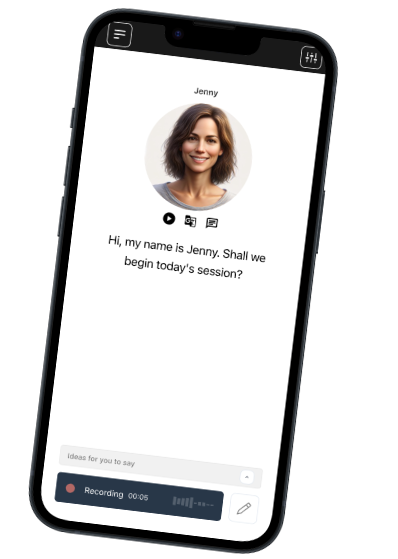
Talkio is the ultimate language training app that uses AI technology to help you improve your oral language skills!
Try Talkio