AI in the Foreign Language Classroom: How to Protect Student Voice in 2026
Last updated on
Editorial owner: Theis Froehlich · Editorial policy
AI in the foreign language classroom is not a future debate anymore. It is a right now problem. Schools evaluating a replacement for a familiar classroom platform can use this Duolingo for Schools alternative guide as a practical comparison. This week, the National Council of Teachers of English published a working framework for responsible AI use in classrooms, and the timing makes sense. Teachers are under pressure to use new tools, students are already experimenting with them, and everybody is trying to figure out where AI helps, where it cheapens learning, and where it quietly steals the whole point of language education.
Here is the honest answer: AI belongs in the language classroom only if it increases speaking time, lowers fear, and protects student voice. If it turns students into prompt editors who never actually speak, it is junk.
That distinction matters because language learning is not just about correct output. As a recent Guardian piece argued, language is also intimacy, culture, judgment, and human presence. Students do not need a prettier worksheet machine. They need more chances to think, react, improvise, repair mistakes, and speak like real people.
What AI should do in a language classroom
The best use of AI is not replacing the teacher. It is removing friction around practice.
That means AI can be useful for:
- giving shy students a low-stakes place to rehearse before speaking in front of classmates
- providing instant pronunciation or vocabulary feedback
- generating role-play scenarios at the right difficulty level
- helping teachers create differentiated speaking prompts faster
- letting students repeat a conversation until they are ready for live discussion
This lines up with UNESCO’s human-centered guidance for generative AI in education. AI should support human learning, not flatten it. In language classes, the north star is simple: more meaningful speaking, not more machine-generated text.
If you want proof that rehearsal matters, look at how professionals already use AI for high-pressure communication. We covered that in The Case for Conversation Rehearsal. The classroom version is the same idea. Students get stronger when they can practice before the real moment.
What teachers should absolutely not outsource
This is where things go sideways fast. Teachers should not outsource judgment, relationship-building, or assessment of authentic speaking growth.
AI can score patterns. It cannot fully understand the social courage it takes for a beginner to keep talking after a mistake. It cannot spot every moment of genuine risk-taking. It definitely cannot replace the value of a teacher noticing that a quiet student spoke up more today than last week.
That is why the strongest classroom setups use AI before or between human interaction, not instead of it. Students might rehearse with AI, then bring that confidence into partner work, group discussion, presentations, or teacher-led speaking checks. That is a good workflow. Handing students a chatbot and calling it participation is lazy nonsense.
If your goal is confidence, the sequence matters. Private practice first, live speaking second. That is also why tools designed specifically for speaking can outperform generic chat tools. In our breakdown of ChatGPT voice mode for language practice, the big gap was structure. Random conversation is not the same as guided speaking development.
How to protect student voice while using AI
If you are experimenting with AI in language teaching, use these guardrails:
- Make speaking the final product. Students can brainstorm with AI, but they should still speak, summarize, debate, or present in their own words.
- Use AI for rehearsal, not replacement. Let students warm up privately, then move into human conversation.
- Keep prompts personal and specific. The more a student connects content to their own life, the harder it is for AI to flatten their voice.
- Assess interaction, not just accuracy. Reward turn-taking, clarification, follow-up questions, and recovery after mistakes.
- Show students how to challenge AI output. NCTE’s framework puts critical AI literacy front and center, and that is exactly right.
- Be transparent. Students should know when AI is being used, why it is being used, and what part of the work still needs to be human.
That last point matters a lot. In language learning, students are not just building sentences. They are building identity in another language. If every draft, answer, and response gets smoothed out by AI, they may sound cleaner on paper while becoming less willing to speak for themselves.
Where AI genuinely helps speaking confidence
Used well, AI can help with one of the hardest parts of language learning: the emotional barrier. Many learners know more than they can say, but freeze when it is time to open their mouth. We see that pattern constantly, especially with adults and perfectionist students.
That is why low-pressure speaking repetition works so well. Students need room to try, stumble, self-correct, and try again. If they can do that before the classroom spotlight hits them, participation gets better. We have seen the same dynamic in our post on AI warm ups for solo speaking practice and in our article on how AI conversation partners can reduce speaking anxiety.
For teachers, that opens up a smarter model:
- assign five to ten minutes of AI conversation warm-up before class or at the start of class
- focus live class time on interaction, negotiation of meaning, and spontaneous speaking
- use teacher feedback for nuance, confidence, and communicative success
- use AI feedback for repetition, consistency, and extra reps
That split is practical, scalable, and a lot more honest than pretending AI can do the whole job.
How to judge whether your classroom use is working
The cleanest test is not whether students enjoyed the tool. It is whether they are speaking more, speaking longer, and speaking with less fear.
Teachers can look for signs like:
- more voluntary participation in pair and group speaking tasks
- longer student turns during discussion
- less dependence on scripts
- better repair strategies when students get stuck
- more willingness to improvise
If you need formal benchmarks, ACTFL’s proficiency framework and assessments are a useful reminder that real progress is about communicative ability, not polished AI-generated sentences. A language class wins when students can express meaning under real conditions.
The bottom line
AI in the foreign language classroom can be brilliant or brain-dead. The difference is whether it protects the messy, human, spoken part of learning.
Use AI to create more rehearsal, more confidence, and more chances to speak. Do not use it to replace struggle, flatten personality, or automate the teacher’s judgment. Student voice is not a bug in language education. It is the whole damn point.
If you want a practical way to give learners more private speaking reps before live class interaction, Talkio is built for exactly that. Students can practice conversations, reduce anxiety, and show up better prepared for the human part that actually matters.
Talk Your Way
to Fluency
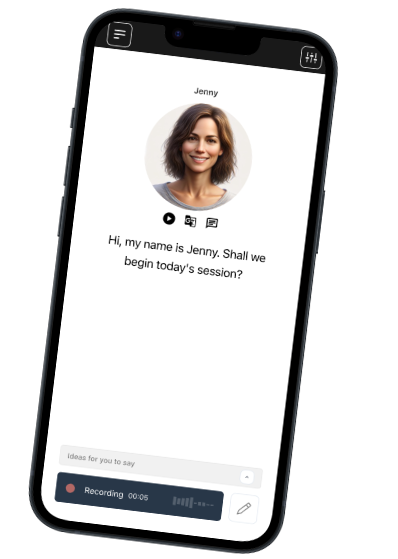
Talkio is the ultimate language training app that uses AI technology to help you improve your oral language skills!
Try Talkio