How to Practice Hotel English With AI Roleplay Before the Summer 2026 Travel Rush
Last updated on
Editorial owner: Theis Froehlich · Editorial policy
Hotels are heading into summer 2026 with the same contradiction every service business is dealing with right now. AI translation tools are getting better fast, but guests still remember the human interaction at the front desk, on the phone, and in the middle of a problem.
That matters because hotel English is not just vocabulary. It is timing, confidence, tone, and the ability to stay calm when a guest is tired, annoyed, or confused. You can translate a sentence. You still have to deliver it like a professional.
That is why AI roleplay is suddenly such a smart way to train hotel staff, hospitality students, and individual learners who want better spoken English for real guest situations. The guide to learning English with an AI avatar explains how to turn those rehearsals into focused feedback and retries. If you can rehearse the check in, the complaint, the room change, the late arrival call, and the awkward small talk before it happens, you show up sharper when the pressure is real.
There is a good reason this matters now. Travel demand is climbing again ahead of peak season, and hotel operators are putting more emphasis on training that improves guest communication quickly. Industry coverage from UN Tourism, Travel And Tour World, and Hotel Executive all point in the same direction: hospitality teams need better communication, not just more software.
Why hotel English is different from general English practice
A lot of learners make the same mistake. They study broad English content and assume that will carry them through guest interactions. Sometimes it does. Usually it does not.
Hotel English is a special category because the conversations repeat, but the pressure changes every time. A simple check in can turn into a passport issue. A polite room request can become a complaint. A quick phone call can turn into a refund discussion. The language is practical, but the emotional stakes are high.
That is why roleplay works so well. Instead of memorizing phrases in isolation, you practice the exact situations where you need them. You can run the same scenario five times, change the guest mood, change the accent, change the speed, and build the kind of flexibility that service work actually demands.
If you want the bigger picture on why speaking practice matters more as translation tools improve, read As AI Translation Gets Better, Speaking Practice Matters More, Not Less. Same story, different setting.
The five hotel scenarios worth practicing first
Do not try to rehearse everything at once. Start with the situations that show up constantly and have the biggest guest impact.
- Check in and check out: confirming names, asking for ID, explaining breakfast, handling payment, and giving directions around the property.
- Room problems: noise complaints, missing towels, air conditioning issues, Wi-Fi problems, and maintenance delays.
- Phone conversations: taking reservations, answering questions about parking, confirming late arrivals, and repeating key details clearly.
- Upsells and recommendations: offering a room upgrade, suggesting local attractions, and recommending hotel services without sounding robotic.
- Difficult moments: apologizing, calming frustrated guests, explaining policy, and offering the next best solution.
This is where AI roleplay beats passive studying. You are not just learning words like reservation, available, or housekeeping. You are learning how to use them while thinking on your feet.
For hospitality educators, lesson designers, or trainers building exercises, this practical guide on hotel English phrases and role plays is worth a look too.
A simple 7 day AI roleplay plan for hotel English
You do not need a massive curriculum to get better fast. You need repetition with realistic variation.
- Day 1: Practice one standard check in conversation until you can deliver it smoothly without reading.
- Day 2: Repeat the same scenario, but ask the AI guest to interrupt you, speak faster, or ask follow up questions.
- Day 3: Switch to phone English. Focus on clarity, confirmation, and polite repetition.
- Day 4: Rehearse a complaint scenario. Your goal is calm language, not perfect grammar.
- Day 5: Practice recommendations and small talk with guests. This is where confidence often falls apart.
- Day 6: Run mixed scenarios back to back so your brain has to switch context quickly.
- Day 7: Record one full mock shift, then review where you hesitated, spoke too vaguely, or missed the chance to sound warm and clear.
That last part matters. The point is not just to survive a script. The point is to notice where your speaking breaks down under pressure and tighten those weak spots.
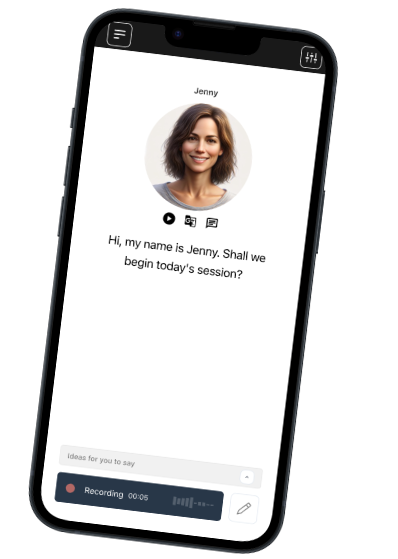
Talkio is built for exactly this kind of rehearsal. You can practice realistic spoken interactions, get feedback on pronunciation and delivery, and repeat scenarios without the social friction that makes many learners freeze with real people. That is the same reason conversation rehearsal is becoming such a useful tool for professionals in other high stakes settings too, which we covered in The Case for Conversation Rehearsal.
What good hotel English actually sounds like
Here is the part people overcomplicate. Great hotel English does not sound fancy. It sounds clear, calm, and helpful.
That means learners should focus less on advanced grammar and more on service moves like these:
- Confirming: “Just to confirm, you are staying for three nights.”
- Guiding: “The elevator is on your left, and breakfast starts at 6:30.”
- Softening: “I am sorry about the delay. Let me fix that for you right now.”
- Clarifying: “Could you repeat the last name slowly, please?”
- Offering options: “I can move you to a quieter room, or I can send someone up immediately.”
Those are not flashy sentences. They are money sentences. They reduce friction, build trust, and make the guest feel taken care of.
If you already know you freeze right before an important conversation, the same pre performance warm up logic from this last minute speaking warm up article works surprisingly well for hotel staff too.
How managers can use AI roleplay for team training
This is not just for solo learners. Hotel managers and training leads can use AI roleplay as a low friction layer between onboarding and real guest exposure.
- Use roleplay before live shadowing so new staff are not walking into guest conversations cold.
- Build scenario banks around your actual property, late check in, overbooking, breakfast questions, parking confusion, and complaint recovery.
- Train for tone, not just correctness, because hospitality English lives or dies on how the guest feels during the exchange.
- Review recordings in short bursts instead of doing long classroom sessions nobody remembers.
That fits the broader 2026 workplace shift toward targeted, practical upskilling instead of bloated training programs, a point echoed in this IMD overview of workplace trends for 2026. In hospitality, that kind of focused training is a hell of a lot more useful than generic language lessons divorced from the job.
The bottom line
If you work in hotels, general English study is fine, but it is not enough. The real win comes from rehearsing the exact guest moments that make or break service.
That is why hotel English plus AI roleplay is such a strong combination in 2026. It is practical. It is repeatable. And it helps learners build the one thing translation tools still cannot give them on command: confident spoken delivery in a real human interaction.
And if you are tempted to think instant translation means staff can skip speaking practice, no, that is backwards. The more AI handles basic language support, the more valuable it becomes when your team can respond with warmth, clarity, and confidence on their own. We made the broader case for that in this piece on why smart learners are practicing speaking even more.
That is the job. Rehearse the real conversation, not the fantasy version of it.
Talk Your Way
to Fluency
Talkio is the ultimate language training app that uses AI technology to help you improve your oral language skills!
Try Talkio