AI Translation vs. Language Learning: Why Speaking Still Matters
Last updated on
Editorial owner: Taylor Freeman · Editorial policy
AI translation can help you understand a message, navigate an unfamiliar place, or handle a short practical exchange. Learning a language serves a different purpose: it lets you participate directly, notice tone, build trust, and respond without placing a tool between you and the other person. The useful question is not whether translation or learning will win, but which one fits the interaction in front of you.
When to translate and when to speak for yourself
- Use translation for access: signs, documents, unfamiliar vocabulary, and urgent practical needs.
- Use your own language skills for relationships, sensitive discussions, interviews, and fast group conversation.
- Check important translated wording with a proficient speaker when accuracy carries legal, medical, or financial consequences.
- Treat translation as support while learning, not as proof that a phrase is natural in every context.
The Translation Trap: Good Enough Is Not the Same as Good
AI translation has improved dramatically. For ordering coffee in Rome or reading a French news article, it works. The problem is that “works” has a ceiling, and most people hit it faster than they expect.
Real-time translation tools introduce a delay, even if it’s just a second or two. In a casual chat, that’s manageable. In a business negotiation, a job interview, or a first date, those pauses create an invisible wall. You’re physically present but linguistically absent. The other person senses it, even if they can’t name it.
Then there’s the nuance problem. Research from The Conversation highlights that AI earbuds can’t capture tone, cultural context, or the subtle difference between polite and warm. When a Japanese colleague says “that would be difficult,” they mean no. Translation tools render it literally, and you miss the message entirely.
The Real Reason People Still Learn Languages (It’s Not About Words)
Here’s what the “AI will replace language learning” crowd misses: most people don’t learn languages to decode words. They learn to connect.
Speaking someone’s language, even imperfectly, signals effort. It says “you matter enough for me to struggle through this.” No AI earbud sends that signal. A 2025 study from the Language Learners Hub found that the top motivation for language learners in 2026 isn’t travel or career advancement. It’s personal connection, wanting to talk to family, partners, or communities in their own language.
Second-generation immigrants are using AI tools to reconnect with heritage languages their parents spoke at home. They could use a translator app to talk to grandma. They choose to learn instead, because the point was never just the words.
AI Translation Actually Makes Speaking Skills More Valuable
This is the counterintuitive part. As AI handles basic translation, the bar for human language skills goes up.
Think about it: if everyone at a global company can auto-translate emails and documents, the employee who actually speaks Mandarin in meetings stands out more, not less. Translation tools commoditize passive understanding. Active speaking ability becomes rarer and more valuable.
The numbers back this up. Multilingual workers earned 19% more in 2026, a premium that’s grown even as translation tools improved. Employers don’t pay extra for people who can paste text into Google Translate. They pay for people who can navigate a conversation, read the room, and build trust across cultures.
The Speaking Gap That AI Can’t Close
There’s a well-documented phenomenon in language learning: people who understand a language but freeze when they try to speak it. Neuroscience tells us that comprehension and production use different brain pathways. Understanding is passive. Speaking is active, demanding real-time word retrieval, grammar construction, and pronunciation, all while managing the anxiety of getting it wrong.
AI translation tools make the passive side even easier. You can understand more languages than ever without studying a single word. But they do nothing, absolutely nothing, for the active side. They don’t train your brain to produce language under pressure. They don’t build the muscle memory of forming sounds your mouth has never made before.
This gap is why AI conversation partners are replacing traditional language exchange apps. Learners have realized that the bottleneck isn’t understanding. It’s speaking. And speaking requires practice with something that listens, responds, and gently corrects you, not something that speaks for you.
What Smart Learners Are Doing Instead
The smartest language learners in 2026 aren’t choosing between AI translation and language study. They’re using both, but for different things.
Translation tools handle the grunt work: reading foreign menus, scanning documents, understanding overheard conversations. That’s their strength. But when it comes to building real speaking ability, they turn to dedicated practice tools that force them to produce language, not just consume it.
Talkio was built for exactly this purpose. It’s an AI-powered speaking practice platform where you have real conversations in your target language, with pronunciation feedback, scenario-based practice, and the kind of patient repetition that no human conversation partner can sustain. It’s not a translator. It’s a speaking coach.
The difference matters. Translation tools make you dependent. Speaking practice makes you independent. One removes the need to learn. The other builds the skill so you don’t need the tool.
The Bottom Line
AI translation is genuinely impressive, and it’s only getting better. Use it. Let it handle the situations where understanding is enough.
But if you want to build relationships across languages, advance your career in a global market, or simply train your brain in ways that passive consumption never will, you need to speak. And speaking takes practice, the kind of deliberate, uncomfortable, rewarding practice that no translation earbud will ever replace.
The machines can talk for you. The question is whether you’re okay with that, or whether you want to talk for yourself.
Talk Your Way
to Fluency
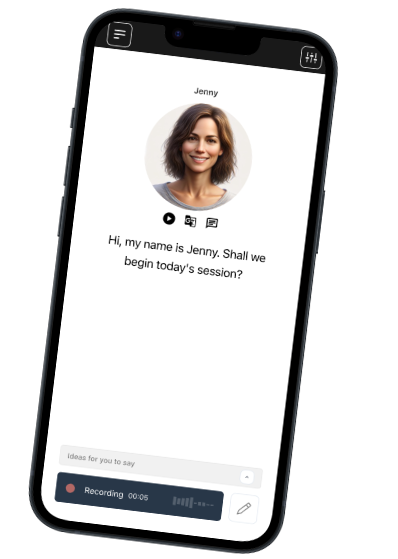
Talkio is the ultimate language training app that uses AI technology to help you improve your oral language skills!
Try Talkio