AI Can Help You Learn, But It Cannot Do the Learning for You
Last updated on
Editorial owner: Kier Lee Zamora · Editorial policy
Artificial intelligence can explain a difficult idea, correct a mistake, and give a learner another chance to practise. It can also produce a finished answer in seconds. Those two uses may involve the same technology, but they do not lead to the same kind of learning.
A recent university cheating story has made that difference hard to ignore. According to The Independent, a Brown University professor became concerned after an at-home midterm produced 40 perfect scores and an average of 96 percent. When the final exam was held in person, the average was 48.6 percent. An investigation is underway, so the case should not be treated as a final judgment about every student involved. Still, the contrast has become part of a much larger discussion about AI and education.
The useful question is not simply, “Was AI used?” A better question is: Did AI help the learner practise a skill, or did it allow the learner to avoid practising it?
AI assistance and AI substitution are not the same
Learning requires participation. You have to recall information, make choices, test your understanding, notice mistakes, and try again. AI can support every part of that process. It can provide an example, ask a follow-up question, adapt an exercise, or give feedback while the learner remains responsible for the work.
Problems begin when AI takes over the difficult part completely. If a student submits an answer they did not create, cannot explain, and could not reproduce independently, the task may be complete, but the learning is not.
This gives us a simple way to tell the difference:
- AI that supports learning gives you more opportunities to think, speak, write, revise, and reflect.
- AI that replaces learning removes the need to understand, decide, practise, or remember.
The same tool can be used in either way. Asking AI to explain why a sentence is incorrect can deepen your understanding. Asking it to write an assignment that you submit without reading can hide the fact that no understanding was developed.
Finishing faster is not always improving faster
Efficiency is valuable, but education is not only about producing an answer. Some of the effort that technology can remove is the exact effort that helps a skill develop.
Language learning makes this especially clear. When you pause to remember a word, rearrange a sentence, or try to pronounce an unfamiliar sound, it may feel slow. But that active effort helps move knowledge from recognition toward usable communication.
This is also why being able to read or understand a language does not always mean you can speak it. Speaking requires you to retrieve words and build sentences in real time. Our article about the language output gap explores why active production needs its own practice.
A shortcut can create the appearance of progress. Practice creates ability.
What responsible AI-assisted learning looks like
Responsible use does not mean refusing all help. A teacher, dictionary, tutor, or grammar guide also provides help. The goal is to use support in a way that keeps the learner mentally active.
Useful AI-assisted learning might include:
- asking for a simpler explanation, then explaining the idea back in your own words;
- writing your own answer before requesting corrections;
- using feedback to make a second attempt rather than copying the suggested version;
- practising a conversation and responding without a prepared script;
- asking AI to quiz you instead of asking it to answer the questions;
- reviewing mistakes and identifying what you will do differently next time.
A helpful test is to ask: Could I explain or perform this without the AI after practising? If the answer is becoming more confidently “yes,” the tool is probably helping you develop independence. If the answer remains “no,” it may only be helping you complete a task.
Detection alone cannot solve the problem
It is tempting to think that schools simply need better AI detectors. However, detection tools can make mistakes. A recent Higher Education Policy Institute report warned that false accusations may affect international students and people who write in English as an additional language.
That matters. Academic integrity is important, but students should not be judged by a detector that cannot provide reliable proof on its own.
A stronger approach is to make learning visible. Teachers can use staged drafts, short discussions, oral explanations, supervised activities, and questions about the student’s process. These methods do not require every assignment to become a closed-book exam. They make it easier to see how a learner arrived at an answer.
The Yale Committee on Trust in Higher Education has also described the need to balance the risks of AI with the responsibility to prepare students for workplaces where these tools will be common. The University of Chicago Law School takes a similar two-part approach in its AI strategy: students need to think independently, but they also need to learn how to use AI responsibly in professional practice.
Why speaking practice is a good use of AI
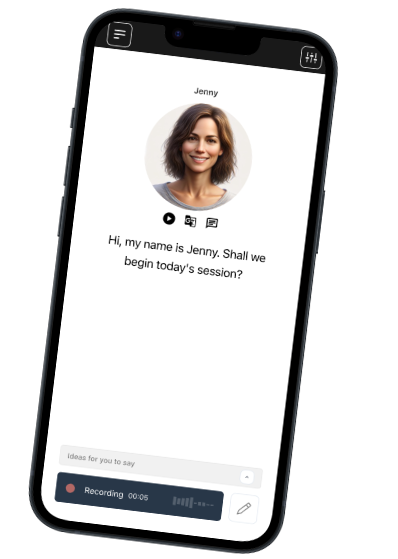
Speaking practice shows how AI can increase participation instead of replacing it. The learner still has to listen, understand, choose words, and respond. AI can provide a patient conversation partner, create realistic situations, and offer feedback, but it cannot build the learner’s speaking ability without the learner actually speaking.
This is the principle behind Talkio. Learners use AI tutors for spoken conversations, pronunciation practice, and feedback on their speaking. The aim is not to generate a polished answer for someone to submit. It is to create more chances to practise the human skill of communication.
For teachers, this can also create opportunities for speaking practice outside a busy classroom. The key is to design the activity around participation and reflection. Our guide to AI speaking homework for language classes suggests ways to keep the student’s own voice at the centre. We have also written about protecting student voice in the AI-supported classroom.
Of course, opening an educational app does not automatically produce learning. Learners still need to engage honestly, respond actively, and pay attention to feedback. Good technology can create the opportunity. It cannot supply the effort on the learner’s behalf.
A practice partner, not a shortcut
Universities are right to take AI-assisted cheating seriously. A qualification should represent knowledge and ability that a person can demonstrate. At the same time, banning every educational use of AI would ignore its ability to offer explanations, feedback, accessibility, and practice at a scale that was previously difficult to provide.
The goal should not be to make learners dependent on AI. It should be to use AI to help them become more capable without it.
That principle applies far beyond exams. Before using AI for any learning task, ask who is doing the important work. If the technology encourages you to think, practise, make mistakes, and improve, it can be a valuable learning partner. If it simply produces something you cannot understand or reproduce, it is a shortcut around the very skill you hoped to gain.
AI can help you learn. It cannot do the learning for you.
Sources
Talk Your Way
to Fluency
Talkio is the ultimate language training app that uses AI technology to help you improve your oral language skills!
Try Talkio