
Why Language Training Is Moving Toward AI Conversations
Last updated on
Editorial owner: Taylor Freeman · Editorial policy
Takeaways:
- Discover why knowing grammar doesn’t automatically translate into speaking ability
- Grasp how repetition and response timing shape real conversational fluency
- See how guided AI language conversations remove scheduling and pressure barriers
- Recognize what AI speaking practice improves and what still requires human interaction
- Anticipate how conversation-centered training changes the way confidence develops
You were told to study harder….memorize more language rules…. or finish another workbook. And when it’s time to speak up, the words seem to hesitate.
The issue isn’t effort – it’s exposure. AJM Journal claimed that communication ability, then and nowadays, still determines academic success, workplace growth, and social confidence
That’s why AI language conversations are gaining attention.
They focus less on memorization and more on interaction – where real improvement actually happens.
It’s easy to claim you may already understand the language. You recognize vocabulary. You can read with ease. But using it in real time feels different.
This gap between knowledge and use is exactly what conversational AI language learning aims to address – by placing speaking, response timing, and interaction at the center of training.
Language develops through exchange, not isolation.
Modern AI-powered language training shifts the focus to guided, repeatable language-learning conversations because fluency grows when you practice speaking (not when you study in silence).
In this article, you’ll see why speaking-centered practice is becoming the foundation of modern training and how interactive systems are changing the way people build confidence.
When Studying Doesn’t Translate Into Speaking
To improve fluency, you first need to recognize why practice often fails.
You memorized rules but rarely produced spontaneous responses
You spent hours memorizing verb tables and filling structured worksheets. Your vocabulary notebook grew, but real sentences rarely left your mouth.
Lessons often reward correctness rather than response speed and timing. Without interaction, knowledge stays stored instead of becoming usable language.
You waited your turn instead of practicing continuously
In class, speaking rotates, so you talk only for a few minutes daily. Most sessions pass with listening, writing, or preparing safe textbook answers.
Fluency requires repetition, not occasional performance under observation pressure. That’s why AI speaking practice offers more consistent exposure than schedules.
You worried about mistakes before finishing your thoughts
You rehearse sentences mentally while others already continue the conversation. Fear of correction breaks the rhythm before your idea fully forms.
Group settings create pressure instead of supportive learning conditions. Private AI language conversations remove judgment, so attempts continue naturally.
You practiced knowledge but not interaction timing
Real communication requires reacting instantly, not translating every phrase first. Long pauses reveal your thought process in your native language before answering.
Guided conversational AI language learning trains response timing through repetition. Frequent language learning conversations turn recall into automatic speaking behavior.
You weren’t lacking knowledge – you were lacking repeated speaking exposure in realistic situations.
Fluency Begins Where Interaction Starts
Once you start speaking regularly, patterns become visible and trainable.
Language grows through exchange, not an isolated study
You learn faster when conversation forces you to make decisions rather than having to recall definitions slowly.
Each reply reshapes understanding because meaning forms as you respond aloud.
Through language-learning conversations, structure becomes a habit rather than just memorized information.
That’s why AI language conversations simulate dialogue instead of static exercises today.
Timing, feedback, and response build real communication ability
You improve when corrections appear immediately after speaking attempts during practice.
Delayed feedback rarely changes behavior because memory fades after the conversation ends.
Guided AI speaking app practice highlights pronunciation, timing, and sentence structure instantly.
With AI-powered language training, you adjust while still engaged in discussion.
Some platforms, including Talkio, analyze responses in real time, so corrections happen within the same exchange – feel free to check it out!
Real conversation reveals strengths you cannot predict beforehand
You notice gaps only when topics shift unexpectedly during dialogue practice.
Reading comfort hides hesitation that surfaces during spontaneous explanations.
Structured conversational AI language learning tracks patterns across repeated speaking situations.
These repeated exchanges expose habits preventing smooth communication during conversations.
Consistent interaction transforms knowledge into dependable speaking behavior over time.
Practice Finally Fits Your Schedule
Regular speaking improves only when practice becomes easy to access.
Begin with availability – partners cancel, tutors reschedule, classmates differ in pace and goals.
Your improvement slows because opportunities depend on other people’s timing each week.
AI language platforms remove the need for coordination, so sessions start whenever you are ready.
Through AI language conversations, you can practice without waiting for a matching schedule again.
Next comes repetition – skill forms when situations repeat enough to feel familiar.
One weekly lesson rarely reinforces memory enough to achieve automatic response speed.
Consistent AI speaking practice recreates scenarios until reactions become immediate and comfortable.
This form of AI-powered language training supports steady progress instead of sporadic exposure.
Finally, consider pressure – audiences change behavior more than most learners notice.
You hesitate, soften your ideas, or shorten your answers when others are listening carefully nearby.
Private language learning conversations encourage experimentation without embarrassment or interruption anxiety.
Consequently, conversational AI language learning helps confidence grow before real interactions.
Your Practice Starts Responding Back
When training reacts to you, learning stops feeling one-sided.
Corrections appear inside the same conversation moment
You notice pronunciation shifts while sentences are still forming aloud naturally. Instead of reviewing later, adjustments happen while memory stays active.
During AI language conversations, feedback is directly connected to spoken attempts. This makes AI speaking practice feel like guided coaching rather than testing.
You control pacing and choose relevant discussion topics
You slow down conversations when processing new structures becomes necessary sometimes. You repeat situations until confidence replaces hesitation in responses naturally.
Through conversational AI, language-learning topics match your goals and contexts. Personalized language-learning conversations prevent the passive participation common in classrooms.
Mistakes become material for repetition instead of embarrassment
You retry sentences until pronunciation stabilizes across multiple attempts comfortably. No reactions interrupt thinking, so attention stays on forming meaning.
Private AI-powered language training supports experimentation without social tension nearby. Consequently, AI language platforms encourage practice, which is essential for fluency.
Gradually, your confidence builds because every attempt becomes usable learning evidence.
What Practice Partners Do Best And What They Don’t Replace
Understanding limits helps you use training tools more effectively.
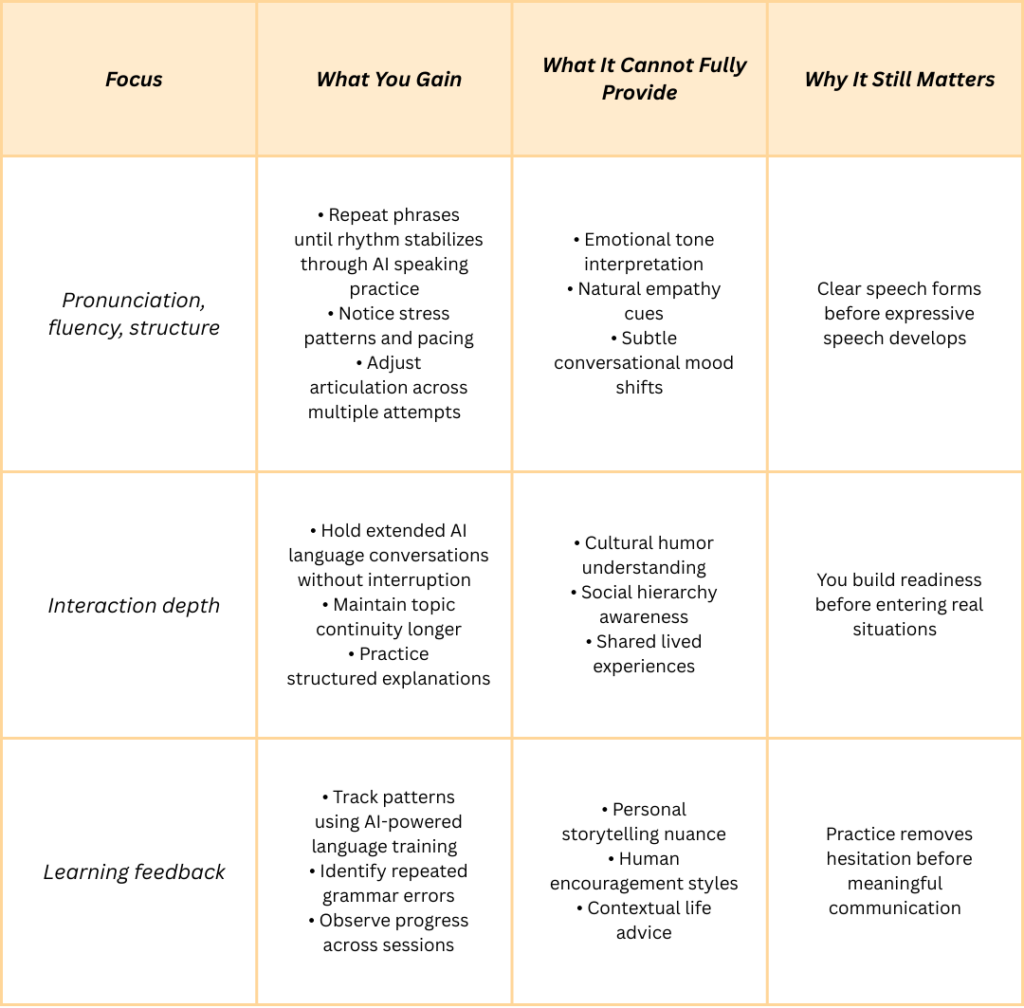
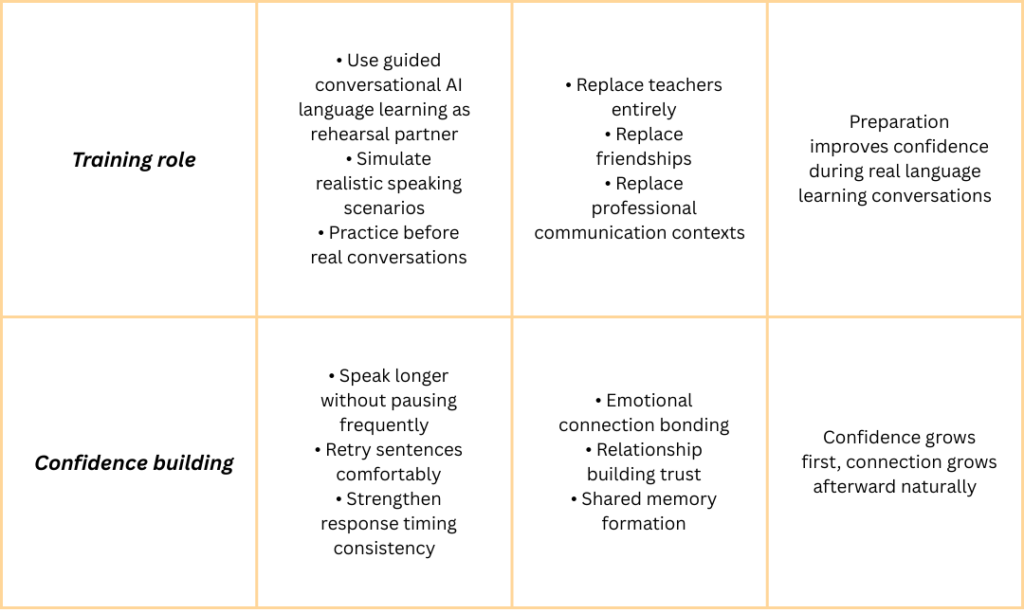
You practice safely first so real communication feels familiar rather than overwhelming.
Conversation Is No Longer Optional in Language Training
You’ve seen why memorization alone rarely produces confident speech. Limited repetition, delayed correction, and classroom pressure often slow real progress.
AI language conversations address those gaps by making speaking more frequent or guided, and/or measurable.
Through structured AI speaking practice…learners adjust pronunciation, timing, and structure while still engaged in dialogue.
Platforms built for this purpose, including Talkio, focus on interaction rather than passive study.
Instead of replacing teachers or human exchange, they strengthen preparation before real conversations happen.
That shift is why AI-powered language training is steadily becoming part of modern learning systems.
Ready to use Talkio now?
You can start immediately and experience a guided conversation firsthand.
Try 7 Days for Free and see how consistent speaking practice changes your confidence.
Have questions?
Visit our FAQs section to explore features, languages, and how the platform works in detail.
Talk Your Way
to Fluency
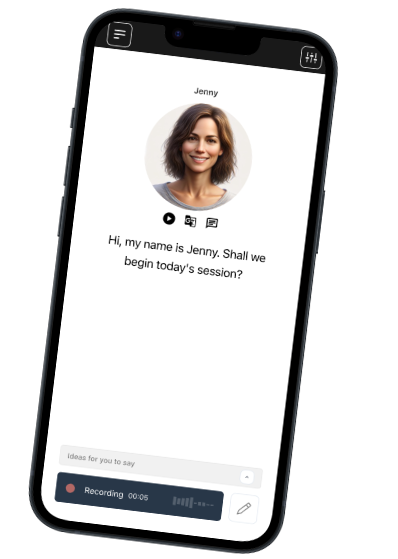
Talkio is the ultimate language training app that uses AI technology to help you improve your oral language skills!
Try Talkio