B2 English Speaking for UK Work: Skills and Practice
Last updated on
Editorial owner: Taylor Freeman · Editorial policy
What the UK’s New B2 English Requirement Actually Means for Your Speaking Skills
If you’re applying for a UK Skilled Worker visa in 2026, you’ve probably heard the news: the English language requirement just jumped from B1 to B2. That single level difference sounds small on paper, but in practice, it’s a significant leap, especially when it comes to speaking.
Most guides about this policy change focus on which tests to take and what scores you need. That’s useful, but it skips the harder question: how do you actually get your speaking from B1 to B2 level? That’s what this guide is about.
The Real Difference Between B1 and B2 Speaking
At B1, you can handle familiar situations. You can describe experiences, give opinions on simple topics, and get through everyday conversations. You might pause often, search for words, and stick to safe sentence structures, but you communicate.
B2 is where things shift. At this level, you’re expected to speak with a degree of fluency and spontaneity that makes regular interaction with native speakers possible without strain on either side. You can argue a point, discuss abstract topics, weigh advantages and disadvantages, and do it all without constantly pausing to construct sentences in your head.
According to the Common European Framework of Reference (CEFR), B2 speakers can “interact with a degree of fluency and spontaneity.” In test terms, that means examiners are listening for your ability to sustain a conversation, not just answer questions.
Why the Speaking Component Trips People Up
Here’s what makes this requirement tricky: most people studying for English proficiency tests over-prepare for reading and writing while under-preparing for speaking. Reading and writing are things you can drill at a desk. Speaking requires a live partner, real-time thinking, and the kind of confidence that only comes from practice.
The UK’s approved Secure English Language Tests (SELT), including IELTS for UKVI, PTE Academic UKVI, and LanguageCert, all test speaking as a separate scored component. You can’t compensate for a weak speaking score with strong reading. Each component needs to hit the B2 threshold independently.
For IELTS specifically, B2 means scoring at least 5.5 across all four components. That speaking score requires you to demonstrate range in vocabulary, grammatical accuracy under pressure, coherent extended responses, and clear pronunciation. If you’ve been studying English mostly through apps and textbooks, that speaking section can feel like a different exam entirely.
The Practice Gap Most Applicants Face
Think about your current English practice routine. If you’re like most visa applicants, you probably read English articles, watch English content, maybe do some grammar exercises. All of that builds passive skills, the ability to understand English when you encounter it.
Active speaking is a different skill entirely. It requires your brain to retrieve vocabulary in real time, construct grammatically correct sentences on the fly, monitor your pronunciation, and maintain the flow of a conversation simultaneously. The only way to get better at this is to do it repeatedly.
This is where many applicants hit a wall. Finding a conversation partner who’s available when you are, patient enough to let you practice, and skilled enough to push you toward B2-level complexity is genuinely difficult. Tutors are expensive for daily practice. Language exchange partners have their own schedules and goals. And practicing alone in front of a mirror only gets you so far.
Five Strategies That Actually Move the Needle
1. Practice With Topics You’ll Face in the Test
B2 speaking tests don’t ask you what you had for breakfast. They ask you to discuss abstract concepts, compare viewpoints, and develop arguments. Start practicing with topics like the advantages of remote work, whether social media improves or damages relationships, or how technology is changing education. These are the kinds of prompts you’ll encounter.
2. Record Yourself and Listen Back
This is uncomfortable, and that’s exactly why it works. Recording yourself reveals patterns you can’t hear in the moment: filler words you overuse, grammatical mistakes you repeat, places where your pronunciation breaks down. Aim to record a two-minute response to a practice prompt every day, then listen critically.
3. Use AI Conversation Partners for Daily Speaking Reps
This is where the landscape has changed dramatically in the past year. AI-powered conversation partners can now hold genuine back-and-forth conversations, push you to elaborate on your answers, and provide feedback on your speaking. Unlike a human tutor, they’re available at any hour and infinitely patient.
Platforms like Talkio are specifically designed for this kind of structured speaking practice. You choose a topic, have a real conversation with an AI partner, and get feedback on your fluency and accuracy. For visa applicants who need daily speaking reps but can’t afford daily tutoring sessions, this approach fills a critical gap.
4. Shadow Native Speakers
Shadowing means listening to a native speaker, then immediately repeating what they said, matching their rhythm, intonation, and speed. This technique, backed by research in applied linguistics, builds the muscle memory and prosody that makes your speech sound natural rather than rehearsed. Podcasts and TED Talks work well for this. Start with slower speakers and gradually increase difficulty.
5. Focus on Discourse Markers
One of the quickest ways to sound more B2 is to use discourse markers naturally: phrases like “having said that,” “on the other hand,” “what I mean is,” and “the thing is.” These signal to examiners that you can organize your thoughts in English, not just translate from your first language. Practice weaving them into your daily speaking until they feel automatic.
How Long Does It Take to Go From B1 to B2?
The honest answer: it depends on where you’re starting and how much speaking practice you’re actually doing. The Cambridge English framework estimates roughly 200 guided learning hours to move from B1 to B2. But guided learning hours are not the same as passive study hours.
If you’re speaking English for 30 minutes a day with focused practice, getting feedback, and working on your weak points, you could see meaningful improvement in 3-4 months. If you’re only reading and listening, that timeline stretches considerably, because your brain processes language production differently from language comprehension.
Building a Daily Practice Routine
Here’s a realistic 30-minute daily routine designed to push your speaking from B1 toward B2:
Minutes 1-5: Warm up by describing your day so far, out loud, in English. No preparation, just talk.
Minutes 5-15: Have a conversation with an AI speaking partner on a B2-level topic. Push yourself to use complex sentences, give extended answers, and disagree with points the AI makes.
Minutes 15-20: Shadow a 2-minute clip from a podcast or news broadcast. Focus on matching the speaker’s rhythm.
Minutes 20-25: Record yourself answering a practice prompt (e.g., “Should universities be free? Why or why not?”). Speak for at least 2 minutes without stopping.
Minutes 25-30: Listen to your recording. Note one grammar pattern and one pronunciation issue to work on tomorrow.
Consistency matters more than duration. Thirty minutes every day beats two hours twice a week, because speaking fluency is built through regular, repeated activation of your language production circuits.
The Bottom Line
The UK’s decision to raise the English requirement to B2 isn’t just a bureaucratic hurdle. It reflects a genuine expectation that skilled workers can communicate effectively in professional settings. Meeting that standard requires real speaking ability, and real speaking ability requires real practice.
The good news: the tools available for speaking practice in 2026 are better than they’ve ever been. Between AI conversation partners, structured practice platforms, and proven techniques like shadowing, you can build B2-level speaking skills without relocating to London or spending thousands on tutoring.
Start now, speak daily, and focus on the areas where B2 differs from B1: sustained fluency, abstract discussion, and spontaneous interaction. The visa requirement has a clear bar, and with consistent practice, it’s absolutely reachable.
Talk Your Way
to Fluency
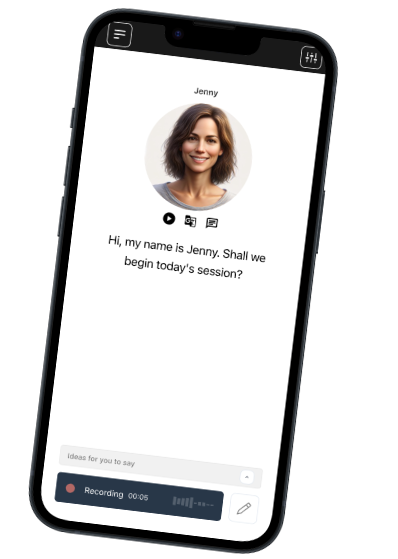
Talkio is the ultimate language training app that uses AI technology to help you improve your oral language skills!
Try Talkio