Should You Learn Korean or Japanese First? A Practical Comparison
Last updated on
Editorial owner: Taylor Freeman · Editorial policy
If you’ve ever found yourself torn between learning Korean or Japanese first, you’re not alone. Both languages are gateways to rich cultures, thriving economies, and global pop culture phenomena. Yet, while K-pop and anime might spark your motivation, the real question remains: which language offers a smoother journey, and what unexpected challenges lurk beneath the surface? Stick around—by the end, you’ll discover an often-overlooked factor that could change your entire decision process.
Alphabet and Writing Systems: The First Hurdle
The Korean writing system, Hangul, is lauded for its simplicity and logic. Developed in the 15th century to promote literacy, Hangul comprises 24 basic letters, and most learners can read it within a few hours of focused study (read more on Hangul’s history). Japanese, on the other hand, uses a mix of three scripts: hiragana, katakana, and kanji—a vast collection of Chinese characters, each with multiple pronunciations. This complexity can make Japanese daunting at the initial stage, as memorizing even essential kanji takes significant time and repetition.
Pronunciation and Speaking
Both Korean and Japanese offer relatively “phonetic” pronunciation—most letters represent consistent sounds. However, Korean features unique consonant sounds and a pitch accent in some dialects, while Japanese relies on a strict syllabic structure. Korean syllables are often flexible, potentially challenging for speakers of non-tonal languages. Japanese pitch accent can trip up learners aiming for natural fluency, but for many, the vowels and consonants are less intimidating than those in Korean.
If you’re serious about conversational skills, using interactive tools can make a difference. For example, practicing daily dialogues with real-time feedback, as provided in Korean and Japanese lessons on Talkio, can help you identify and correct tricky areas early on.
Grammar: Similarities and Surprises
Grammatically, both languages share roots in honorifics and subject-object-verb sentence structures, which may initially flatten the learning curve if you study one after the other (Britannica on Japanese grammatical structure). Politeness levels, particles, and verb endings add complexity, though their logic is consistent. Korean shines in its use of Hangul across all language registers, while Japanese leans more heavily on kanji in formal writing and literature.
Culture, Content, and Motivation
Your interest in Korean or Japanese pop culture—music, TV, drama, comics—will keep you engaged long after the novelty wears off. Japan’s manga and anime, or Korea’s dramas and pop music, can act as powerful motivators and provide immersive learning opportunities. Both countries offer abundant language-learning resources, but the quantity and format may differ.
The Unexpected: Community and Resources
Here’s the twist: the “best” language for you may be shaped by your local or online community. Japanese, for instance, has been a globally popular language for decades, yielding more textbooks, courses, and local classes. Korean is catching up fast, especially with the rise of K-pop, but you may find fewer local classes depending on where you live. Exploring language exchanges, virtual tutors, or AI-powered conversation partners can help bridge this gap (see real learner discussions and solutions).
In fact, some learners find it easier to progress in the language for which they have more support—be it friends, teachers, or digital communities. So before you decide, consider not just your curiosity, but where you can build strong support networks. For in-depth advice on the differences in learning Korean and Japanese, you can compare linguistic features in our Japanese vs. Korean comparison guide.
The Big Reveal: The Power of Personal Context
Ready for the factor most language guides miss? Your personal context—not difficulty, not popularity—matters most. If you have regular access to Korean speakers, want to travel to Seoul, or already watch K-dramas daily, Korean may quickly feel more rewarding. If your social circle includes Japanese friends or you dream of a trip to Tokyo, Japanese will seem more relevant. The “surprise” is that the right language for you isn’t decided in a vacuum; it’s shaped by your day-to-day motivations, opportunities for interaction, and real-world exposures. The smoother pathway is the one that fits your lifestyle—and the one you’ll enjoy sticking with.
Talk Your Way
to Fluency
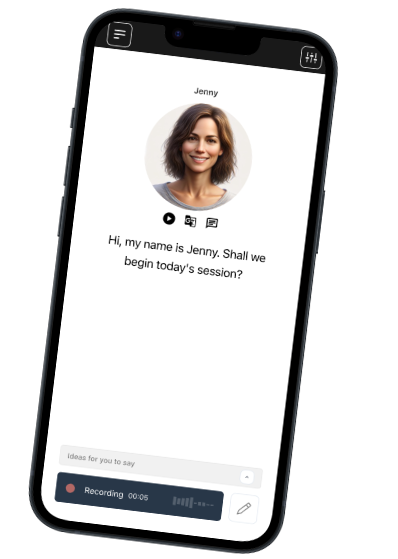
Talkio is the ultimate language training app that uses AI technology to help you improve your oral language skills!
Try Talkio