How AI Understands Meaning: Semantics, Context, and Limits
Last updated on
Editorial owner: Grzegorz Markowski · Editorial policy
Language AI does not understand a sentence in exactly the way a person does. It processes patterns in words and context to predict useful representations and responses. Context helps it distinguish meanings—for example, whether bank refers to money or a river—but the result can still be confidently wrong when the prompt is ambiguous or the relevant knowledge is missing.
A simple way to think about contextual meaning
- Words contribute possibilities; nearby words and the wider conversation narrow them.
- Syntax helps identify relationships such as who did what to whom.
- Examples and instructions in a prompt can steer the interpretation toward a domain or task.
- Generated explanations should still be checked when precision, current facts, or specialist knowledge matters.
Takeaways:
- Discover how AI systems interpret language by analyzing patterns, semantics, and contextual cues rather than simply recognizing words.
- Explore why meaning in human communication depends on tone, context, and shared experiences beyond dictionary definitions.
- Analyze how modern language models build meaning by identifying relationships between words, phrases, and ideas across large datasets.
- Identify where AI language comprehension performs effectively – and where ambiguity, emotion, and figurative language still create challenges.
- See how context-aware language practice helps learners experience how meaning develops in real conversations.
Have you ever questioned how people engineer or program AIs to understand what you really mean when you speak or write with them?
It’s easy to assume that if an AI recognizes words…it understands the message.
But real AI language comprehension involves far more than matching vocabulary.
As language learners quickly notice, meaning often lives between the lines – shaped by tone, context, and intention.
For instance, a simple phrase like “That’s interesting.” Depending on the situation, it could express curiosity or doubt or even quiet disagreement.
Human listeners rely on shared knowledge and cues to interpret it.
For AI systems? This challenge lies at the heart of natural language understanding… where machines must distinguish among word forms, the meanings they carry, and/or the intentions behind them.
Linguists and philosophers have long recognized that the meaning of language operates on multiple levels.
In studies of semantics, scholars distinguish between:
- semantic theories – which explain what words and sentences mean.
- metasemantic theories – which examine why those expressions carry those meanings in the first place.
This distinction, as highlighted in Theories of Meaning, discusses an important insight for AI language technology: recognizing words is only the first step toward interpreting meaning.
This is why researchers studying semantics in language technology focus heavily on context and co-text for human understanding and Large Language Models (LLMs).
The goal isn’t just to recognize language patterns but to help systems model how AI understands meaning through relationships among words, situations, and human communication.
What Semantics Means in Human Language
Before exploring how machines interpret languages…it is vital to first understand how meaning works for us humans as learners and users of language.
When you read or hear a sentence, your brain just doesn’t process isolated words. Instead, it combines them into meaningful ideas depending on how they were used as intended.
Linguists coined this as “Compositionality” (also known as compositional meaning).
By definition, it is the principle that the meaning of a sentence comes from the meanings of its parts and how those parts are arranged.
For example:
- “The cat chased the mouse.”
- “The mouse chased the cat.”
The same words appear in both sentences but the order changes the meaning completely.
Humans instantly recognize this relationship between structure and meaning. Language systems must learn to model the same patterns.
Moreover, meaning also depends heavily on context.
Many expressions only make sense when you understand the situation (in which they are used).
Consider these examples:
- “I’ll call you later.”
- Later today? Tomorrow? Next week? The exact meaning depends on the conversation.
- “Sure.”
- It might mean enthusiastic agreement.
- It might signal hesitation.
- It might even express quiet skepticism depending on tone.
Humans use tone or facial expressions and/or shared knowledge to interpret these differences.
On the contrary, AI systems or software must instead decode any patterns in language data to establish what the speaker/user likely meant.
Some words even change meaning depending on who is speaking or where they are.
Linguists call these “context-dependent expressions.” Examples include:
- “I” → refers to the speaker
- “Here” → refers to the speaker’s location
- “Now” → refers to the current moment
When you utter the phrase: “I am learning English,” the word “I” is referring to yourself.
But if another person says the same sentence, the “I” seems referring to them. That’s how it works.
If you observed it, dictionary definitions alone rarely explain how expressions work in real communication. Meaning develops through:
- context,
- cultural habits, and
- shared experience.
This is why understanding natural language focuses not only on vocabulary but also on how meaning emerges through usage patterns in practical conversations.
Why Context Changes Everything in Language
Meaning in language rarely comes from individual words alone.
Instead, interpretation develops through the interaction of surrounding words or real-world situations and shared knowledge between speakers.
How Surrounding Words Guide Interpretation
Many words carry multiple meanings and the surrounding sentence helps your brain select the correct one instantly.
Consider the word “bank.”
- “She deposited money in the bank.”
- “They sat by the bank of the river.”
The same word appears in both sentences, yet the meaning changes completely. Nearby words such as “money” or “river” quietly guide interpretation.
Linguists refer to this as polysemy, where a single word can express several related meanings depending on context.
Programmers and developers face the same challenge.
AI must analyze surrounding words and patterns to determine which meaning fits the situation to interpret language accurately.
Situational and Cultural Context in Communication
Meaning also shifts based on where and how language is used. Imagine someone saying:
“That’s bold.”
The interpretation might change depending on the setting:
- In a design discussion → admiration for creativity
- In a workplace meeting → subtle criticism
- In casual conversation → playful encouragement
These social and situational signals are an important part of natural language understanding.
For AI systems, modeling these signals is more difficult because machines must infer intention from patterns in language rather than personal experience (which they don’t have).
When One Sentence Holds Multiple Meanings
Entire sentences can also support several interpretations at once. Consider this statement:
“You’re early.”
Depending on the context, it might mean:
- Appreciation (“Great, you arrived before the meeting!”)
- Surprise (“I didn’t expect you so soon.”)
- Mild annoyance (“You came earlier than planned.”)
Identifying the correct interpretation requires analyzing context beyond the literal sentence for AI language systems.
Context turns language from a simple sequence of words into meaningful communication.
How AI Models Represent Meaning
Modern language models are trained on extremely large text corpora and learn patterns that enable them to interpret and generate language.
Learning Meaning from Patterns in Language Data
AI language systems first examine repeated patterns that appear across many examples of real communication.
- Observe repeated word patterns
Example: The phrase “make a decision” appears frequently in similar contexts.
- Analyze sentence structures across large datasets
Example: AI notices how verbs, nouns, and modifiers commonly interact.
- Detect common contexts for specific words
Example: “Cold” appears in sentences about weather, illness, or emotions.
- Compare similar sentence variations
Example: “I enjoy reading” and “I like reading” appear in related patterns.
- Strengthen meaning through repeated exposure
Example: Frequent usage teaches systems how expressions typically function.
Associating Words With Usage Instead of Definitions
Words are converted into numerical representations so the system can compare how they appear across many contexts.
- Study how words appear in real conversations
Example: “Run” appears in sports, business, and technology discussions.
- Evaluate surrounding words to interpret meaning
Example: “Run a company” differs from “run a marathon.”
- Link meaning to usage frequency
Example: Common phrases help systems predict likely interpretations.
- Compare multiple contexts for the same word
Example: “Light” may describe brightness or weight depending on context.
- Build flexible meaning associations
Example: Usage patterns guide AI language comprehension rather than strict dictionary rules.
Capturing Relationships Between Concepts and Expressions
Language models also learn meaning by identifying how ideas tend to appear together.
This step is supported by deep learning architectures that analyze relationships between tokens within a sentence.
- Connect related ideas across language examples
Example: “Doctor” often appears near “hospital,” “patients,” or “treatment.”
- Map associations between similar terms
Example: “Big,” “large,” and “huge” often share nearby contexts.
- Recognize conceptual groupings in text
Example: Words related to travel appear together in many sentences.
- Track patterns linking actions and outcomes
Example: “Study” frequently connects with “improve” or “learn.”
- Support broader natural language understanding
Example: These connections help explain how meaning in AI language systems develops.
Interpreting Context Across Sentences
Language understanding also requires tracking information beyond individual sentences.
Modern language models use mechanisms that allow them to focus on relevant words and maintain contextual relationships throughout a conversation.
- Analyze how earlier sentences shape later meaning
Example: Pronouns like “they” depend on earlier references.
- Maintain context while processing conversations
Example: A question influences how the following answer is interpreted.
- Detect topic continuity across paragraphs
Example: Repeated keywords signal the same subject.
- Adjust interpretation based on dialogue flow
Example: Clarifications change the meaning of earlier statements.
- Improve contextual language understanding
Example: Systems track context to interpret longer conversations.
Refining Meaning Through Continuous Training
AI language models improve as they process more examples and receive feedback during training.
- Learn from updated language examples
Example: New slang or expressions appear in training data.
- Adjust predictions through feedback signals
Example: Corrected outputs guide improved interpretation.
- Strengthen relationships between expressions
Example: Similar phrases reinforce shared meaning.
- Improve response accuracy over time
Example: Patterns become clearer after repeated analysis.
- Enhance how AI understands meaning in communication
Example: More examples help systems recognize nuanced usage.
Developers gradually build a working model of language that reflects how people actually communicate rather than relying on static definitions.
Where AI Interprets Meaning Well And Where It Still Struggles
Looking at both the strengths and limits of AI language comprehension helps you see how modern systems process meaning during real communication.
| Language Situation | What Happens in AI Systems | What You Notice as a Language Learner |
| Common phrases and everyday expressions | Systems trained on large datasets recognize repeated patterns quickly, improving natural language understanding in familiar situations. | You receive accurate responses when using common expressions such as greetings, requests, and everyday conversation. |
| Structured communication patterns | AI detects intent when sentences follow predictable forms, thereby strengthening its understanding of meaning in regular dialogue structures. | Questions, instructions, and simple explanations are usually interpreted correctly. |
| Context-based learning feedback | Many platforms provide corrections based on surrounding language use, improving contextual language understanding during practice. | You receive guidance that reflects how words are used in real sentences. |
| Ambiguous expressions or figurative speech | Metaphors, sarcasm, or irony can confuse meaning in AI language systems, since meaning may differ from literal wording. | Expressions like “break a leg” or “nice job” may be interpreted literally. |
| Emotion and subtle intent | Tone, emotional nuance, and implied criticism are difficult for AI language comprehension to interpret accurately. | Humans often detect feelings from context that machines may overlook. |
| Shared human experiences | Some meanings rely on cultural background or personal experience beyond training data used in semantics in language technology. | Situations involving humor, social norms, or cultural references may produce unexpected responses. |
Even still with these limits, advances in natural language understanding continue to improve how AI understands meaning in everyday communication
Final Words
Throughout this discussion, you’ve seen that the meaning of language rarely resides in individual words.
Instead, it grows from context, patterns of use, and shared understanding between speakers.
Research on semantics in language technology shows that AI understands meaning by analyzing how words co-occur across many contexts, thereby supporting broader natural language understanding.
Still, machines do not experience language the way humans do – they model usage rather than human awareness.
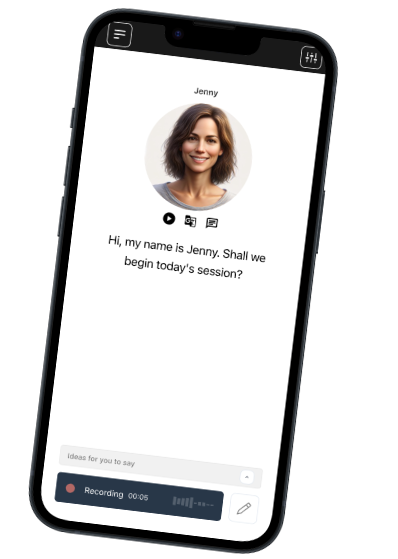
Tools such as Talkio AI simply provide structured environments where learners practice communication and develop stronger AI language comprehension through contextual conversation and feedback.
Interested How We Work?
Visit our Free Language Guide page to simulate how Talkio works and experience structured speaking practice firsthand.
It demonstrates how context-based interactions help learners build confidence in real conversations..
Want to Learn More About Talkio?
Visit our About Us page to connect with our team and contact the right person for your questions.
Talk Your Way
to Fluency
Talkio is the ultimate language training app that uses AI technology to help you improve your oral language skills!
Try Talkio